 To continue from last time, this entry being the culmination of the encounter between Feuerbach and Hegel, and having the promised appearance of some music:
 ...This all may seem tedious, but it is necessary to grasp in order to see where Marx is coming from when he refers to “materialism.” For what Feuerbach does next is show that Hegel did indeed ground the necessitation of the relationship between Spirit and the Absolute, but merely did not emphasize it: he grounded this necessitation precisely in what is seen by Feuerbach as material “nature,” that supposedly non-Spiritual category that is both prior to and outside of significance. This “nature” proves to be nothing other than what Hegel must refer to in Feuerbach’s eyes in order to fully develop the consistency of his God: not the Absolute in Spirit, but the principles that compose Spirit itself. It is thus clear to us why this is such a revolutionary overthrow of Hegel, and why this changes the whole essence of God “as a religious object:” if Hegel specified what “nature” was, then God, the culmination of Spirit, would issue forth necessarily not from His own essence (the essence of the Absolute), but only from the completion of Spirit insofar as Spirit itself completes itself only in accordance with its presuppositions. Instead of the existence of God and the meaningful found within the self-developed principles of Spirit (the layerings of meaningful action that produce later layerings), God would be the result of the “nature” that exists before and outside of these principles—in what makes these principles possible. To put it yet another way, if the principles that direct and propel Spirit’s development are shown to lead Spirit to a state of culmination, then calling this state of culmination “God” will not be arbitrary. Nothing will exist other than this culmination, and since it culminates necessarily, it will be full, final, perfect. Thus the preconditions of Spirit, the structure that effectuates and provides for its development, its “nature,” are what are to be elucidated for Feuerbach, because they are what, instead of Spirit alone or by itself, will be considered real, since they make up God. All that needs to be done is lay the emphasis on “nature” instead of the Absolute when asserting the identity of the Absolute and Spirit, and Spirit will be organized from the ground up, and its culmination (God, significance itself) as well.
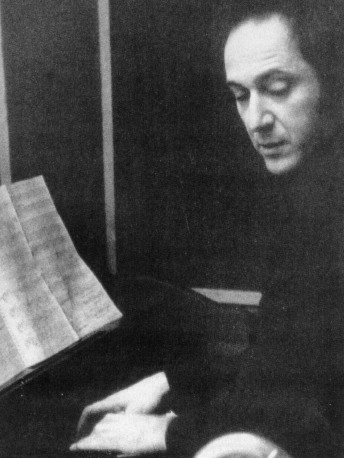
To digress shortly, we may remark that a good example of the difference between the two—an example one can experience for oneself—can be culled from the sphere of music. Hegel’s God is a symphony by Beethoven. Notes appear in one of these symphonies and move in both harmony and discord based on the genius of the compositional ideas that form them and break them apart: Beethoven composes a symphony to articulate and bring into a vocabulary of notes various ideas and feelings, letting them take shape in accordance with their meaning and intention. Take Beethoven’s third “Eroica” symphony. Composed in 1803, it is a grand statement about the nature of heroism and the hero, dedicated to Napoleon. Throughout the symphony, heroism as an idea is brought to music such that when the idea ceases its movement, when it is completely stated, the notes stop, and the symphony is over. Each section, each movement in one of these symphonies is one such statement of the author regarding heroism, organized around a discrete and distinct notion that occurs in his head, and together they make up nothing less than an epic series of articulations that convey this general idea. Led on by his own intentions, the symphony is Beethoven’s statement regarding Napoleon—this is such the case that after Beethoven (like much of Europe) witnessed Napoleon’s coronation of himself in late 1804, he supposedly scratched out the dedication to him on the title page of the symphony, giving the symphony itself a different meaning, a different intention. Now, turning to Feuerbach, we might say that he is advocating a type of articulation of meaning that would look like a composition by the British composer Steve Reich. In his “Music for 18 Musicians” (1974) Reich assigned various instruments a particular series of notes to play, a particular tempo to play them at, and a particular way to play them, and then simply had them begin and maintain that particular assignment. The result is a massive series of noises that are merely the collection of various instruments each keeping to and repeating their individual utterance. At any moment of the work, the 18 musicians are busy combining together their individual sounds in different permutations, and doing so only really because they are playing in the same room together. In fact, the entire work is the result of an exhaustion of all the possible permutations of the various instruments: when each individual instrument’s series of notes are over and played, they simply stop, and the end of the work is achieved when they all are simply done with. Thus, each movement of the music is a product of the maintenance of the original presuppositions assigned to each instrument. Each moment is organized from the bottom up, and does not express any idea other than that produced by the mathematical combination of the instruments. Far from being something led on by the genius of a divinely inspired mind articulating a vast meditation on the nature of heroism in his historic era, the composition of Reich is about the beauty of the ability of individuals to combine and create harmony out of nothing more than their own movements, out of their own natures. These works give some weight and definiteness to Hegel and Feuerbach’s ideas of God, embodying them, as it were.
To digress shortly, we may remark that a good example of the difference between the two—an example one can experience for oneself—can be culled from the sphere of music. Hegel’s God is a symphony by Beethoven. Notes appear in one of these symphonies and move in both harmony and discord based on the genius of the compositional ideas that form them and break them apart: Beethoven composes a symphony to articulate and bring into a vocabulary of notes various ideas and feelings, letting them take shape in accordance with their meaning and intention. Take Beethoven’s third “Eroica” symphony. Composed in 1803, it is a grand statement about the nature of heroism and the hero, dedicated to Napoleon. Throughout the symphony, heroism as an idea is brought to music such that when the idea ceases its movement, when it is completely stated, the notes stop, and the symphony is over. Each section, each movement in one of these symphonies is one such statement of the author regarding heroism, organized around a discrete and distinct notion that occurs in his head, and together they make up nothing less than an epic series of articulations that convey this general idea. Led on by his own intentions, the symphony is Beethoven’s statement regarding Napoleon—this is such the case that after Beethoven (like much of Europe) witnessed Napoleon’s coronation of himself in late 1804, he supposedly scratched out the dedication to him on the title page of the symphony, giving the symphony itself a different meaning, a different intention. Now, turning to Feuerbach, we might say that he is advocating a type of articulation of meaning that would look like a composition by the British composer Steve Reich. In his “Music for 18 Musicians” (1974) Reich assigned various instruments a particular series of notes to play, a particular tempo to play them at, and a particular way to play them, and then simply had them begin and maintain that particular assignment. The result is a massive series of noises that are merely the collection of various instruments each keeping to and repeating their individual utterance. At any moment of the work, the 18 musicians are busy combining together their individual sounds in different permutations, and doing so only really because they are playing in the same room together. In fact, the entire work is the result of an exhaustion of all the possible permutations of the various instruments: when each individual instrument’s series of notes are over and played, they simply stop, and the end of the work is achieved when they all are simply done with. Thus, each movement of the music is a product of the maintenance of the original presuppositions assigned to each instrument. Each moment is organized from the bottom up, and does not express any idea other than that produced by the mathematical combination of the instruments. Far from being something led on by the genius of a divinely inspired mind articulating a vast meditation on the nature of heroism in his historic era, the composition of Reich is about the beauty of the ability of individuals to combine and create harmony out of nothing more than their own movements, out of their own natures. These works give some weight and definiteness to Hegel and Feuerbach’s ideas of God, embodying them, as it were.

1 comment:
moar pls
Post a Comment