Showing posts with label Technology. Show all posts

Friday, February 5, 2010

How to get off Facebook

So, I just got off Facebook. Why? Basically privacy concerns, but also because I fundamentally felt that the technology was much more promising when it first came out. There were limitations: Facebook couldn't do everything and anything. It felt like an extension of text-messaging. Twitter now is more like what Facebook was then, although that could change too. But now the clunky thing just feels like a database, a slightly more entertaining version of email--which, by the way, also just acts as a huge data mining operation:

For content that is covered by intellectual property rights, like photos and videos [...], you specifically give us the following permission, subject to your privacy and application settings: you grant us a non-exclusive, transferable, sub-licensable, royalty-free, worldwide license to use any IP content that you post on or in connection with Facebook [...]. This IP License ends when you delete your IP content or your account unless your content has been shared with others, and they have not deleted it. [And] When you delete IP content, it is deleted in a manner similar to emptying the recycle bin on a computer. However, you understand that removed content may persist in backup copies for a reasonable period of time (but will not be available to others).

That's the "privacy" statement you agreed to a little while ago. It was worse a couple months ago, when they made a huge grab just to own everything outright and in perpetuity. They were a little bit more explicit then about what this all involved:

You hereby grant Facebook an irrevocable, perpetual, non-exclusive, transferable, fully paid, worldwide license (with the right to sublicense) to (a) use, copy, publish, stream, store, retain, publicly perform or display, transmit, scan, reformat, modify, edit, frame, translate, excerpt, adapt, create derivative works and distribute (through multiple tiers), any User Content you (i) Post on or in connection with the Facebook Service or the promotion thereof subject only to your privacy settings or (ii) enable a user to Post, including by offering a Share Link on your website and (b) to use your name, likeness and image for any purpose, including commercial or advertising, each of (a) and (b) on or in connection with the Facebook Service or the promotion thereof.

Justifiable outrage by users has kept this all in the air as of today, but the arguments are mounting by the people who wrote that last statement that ownership of your information is completely natural--it's what people should expect. This, of course, is only one instance where intellectual property "rights" have been extended to basically steal any private information of yours and use it to make money. Meanwhile, whatever isn't just outright obscene about the whole operation is covered up by styling it as you helping the company "create" by "generating" "content." Moreover, if you demand that you own anything you write there, any of your photos--that's actually getting in the way of their ability to further "innovate." It's an immense ratcheting-up of the consumerist arguments of old: your individual, private preferences, "expressed" clearly and in the open enough (that is, if you think using money is the same thing as genuine personal expression, like our Supreme Court), can magically bring you better products and services (especially services). But it's also a coordination and hyperextension (if I can say that) of a lot of other rhetoric about "innovation" and "creativity" in business that have an really long history and basically pops up whenever business practices as a whole are looking as shady as they do now. Meanwhile, we can't even find information about who precisely caused the financial disaster--not to mention how exactly they used our bailout money--and every attempt at introducing transparency is met by the argument that it will somehow cause even more market "instability."

But I'll return from all these indicators that a discursive struggle over the meanings of all these words in quotes is occurring and has real consequences (and that it works the other way around too) to my point that Facebook has also become, generally, an unwieldy behemoth. This is what people, who I've talked to about this, don't quite seem to understand--or indeed admit but don't do anything about: all this data you're giving them hasn't produced a better service at all! There are many, many more creative ways to communicate with people--especially now with Twitter, Skype, and all sorts of other microblogging and friend-finding technologies which can only further proliferate with time! In using something other than Facebook (not to mention email), you're not giving up much that is substantive about your connection with people--you're giving up the chance to occasionally get drunk and creepily poke one you forgot existed.

Now, I realize that for a lot of people Facebook too is more than this (even though the almost enforced-fun had in the recent "doppleganger week" suggests otherwise), and I don't want to knock anything that is indeed rewarding and meaningful. After a couple years, when the technology spread to older people (but also to other younger people), these people used it as a way to find old friends who might have had email--and this also prompted Facebook to fundamentally change it's texting-like structure (not to mention the structure of the friend-networks themselves, which were primarily college-based) to something broader. The whole thing itself became an alternative to email in some way (and set the stage for Google Wave, which, I think, fundamentally seeks to do away with that altogether and pave the way for users to slip in and out of constant streams of updates, never exiting the network) and offered something like what it was to talk to them back in school or whenever they were in close proximity (whereas for the college kids at the beginning, it was merely an alternative to day to day interaction, providing a forum where all sorts of additional creepy/cute awkwardnesses could be created). This is substantial--and it is combined with the comfort of only having to talk to someone in little bursts, when most internet-based technology provides, fundamentally, too-instantaneous of a connection. It's as if these people are trying to work out a new form of technologized familiarity, one that works on the level of weeks rather than seconds, and lets you live side-by-side across huge distances--like future astronauts on the way to a distant planet calling home, only not minding at all that delay in transmission of a few minutes... since the delay in connection has become not a feature of the technology but of our lives themselves, which are pauses in the flow.

So I'm wary of condemning this sort of effort, which provides new possibilities the more and more people consciously take hold of and further refine its specificity (that is, it is a site of struggle to define the shape of our everyday practices). But there is still the danger that someday, you're still just good old friends with certain people when it is convenient to be. And Facebook itself, since it always needs more data, seems to encourage this by constantly pushing you to extend your connections to less and less relevant people in your life (like famous people). This, of course, is countered by the creation of fan pages (strenuously encouraged by Facebook instead of and making false or fictional identities--as you can wonderfully do in Twitter and as I have done with I.A. Richards), which then provide another basis for everyone to reconnect substantially within the system (that is, Facebook can never become a fantasy space). But the tendency--despite this uneven and counter-balancing virtual topography--is to disperse by connection. And given that, why not take all these new forms of interaction that we are building, and make something even better than Facebook that caters to them (and meanwhile allows its content to be governed by a Creative Commons license, for example, like Flickr).

This, however, is just my way of responding to the biggest argument against getting off Facebook which was proffered to me ceaselessly during this whole process: that I'll lose all my friends. Not only did many people say this to me--but only mildly, as if people who said it also knew it was bullshit--but also Facebook itself shows you pictures of your friends (not just of the friends, but of the significant photos in which you and your friends are there, having a good time--they actually have algorithms that use your their data to tell them this) while you try and wrest yourself from the whole network and "deactivate" (you can't delete--all your information still stays there with them) your account! My response is simply that it would be extremely depressing if friendship was the same thing as being networked together with someone on Facebook! We have to draw this fundamental distinction between the social activity in "social" media or "social" networking and actual, genuine social life if we want to have any rich conception of the latter--or, more importantly (since it shouldn't ever remain a merely moral issue), if we ever want to push our technologies further towards actually integrating that social life. On that last point, you can see from this and all the above that I'm no Luddite--which was another, more popular way I was characterized throughout this process. With the proliferation of those alternative ways to communicate that I mentioned above, I don't see any reason why the connectivity with anyone has to drop off. So it's really a matter of asking whether we really want to accept the form of friendship being "given" to us (with the caveat that it takes everything private about you and puts a price tag on it).

So, now that it's clear why I indeed got off of Facebook, I'll finally just take you through how you can do it:

1) Go through and find all the emails and other contact information (AIM, twitter, blog) of your friends, and create a little database for them. You'll be surprised at how many people's emails you don't know how reliant you are on Facebook to connect you to them when you can just take some initiative and talking to them yourself. This isn't hard--it takes about 20 minutes max.

2) Go through and copy all the pictures you want to keep--if you don't have copies of them on your computer already (and you might not). This'll take 5 minutes max.

3) Delete your information. I'd say delete as much as you feel comfortable deleting--though I'd stress getting rid of a lot of your profile info. I think it's okay to leave some pictures up there and some of your other stuff... they're Facebook's anyway now. Moreover, your friends will be taking pictures of you and putting you up there, so it's not like you have to cover up all of your tracks. It'll take 5 minutes.

4) Take your contact info and send out a notification to your friends about the change. I'd try and do this in email, because then it makes people more comfortable replying to you and getting the ball rolling back in that form of connectivity. You can do it through Facebook, though--but remember that this doesn't encourage any alternative effort to contact you on their part. Moreover, Facebook doesn't let you actually send an email to all of your friends at once without creating a group (and you have to be suspicious about this, which, while trying to keep out spam, still says something about the indirect sort of communication that Facebook in reality is). This will probably take 10 minutes.

5) Do a final check and go to Accounts. At the bottom of the page will be an option to deactivate your account. Click it, ignore the bullshit about how your friends will miss you, and get the hell out of there and into newer, more truly creative forms of communicating with all those people. Also, remember that Facebook will save all your password information so that if you ever revisit the site, they'll be there waiting for you to come back--don't rejoin by mistake. But if you forgot to get rid of anything, indeed rejoin and you'll be able to get rid of it and deactivate--as they repeatedly assure you, all your stuff will be there just as it was before (since they own it). This'll take 5 seconds.

You can also commit seppukoo, if you want to do all this in a more flashy way. And if you decide to reform the thing from within (which I hope you do--I'm not out to convince anyone why they should do this, just to relate why I myself did it and how you can if you want), make sure check your privacy settings.

Friday, December 25, 2009

Typewriter notes

I thought a typewriter would help me write, in that it would slow down my composition and make me think more about the irreversibility of my sentences (the ceaseless push onward, that can't really be erased like handwriting). Currently though the device is serving a different purpose: it has turned into a way for me to take notes.

I hate starting up a computer when I have something to write down. And I like seeing the words, fiddling with them like blocks. So prior to this I would simply use scraps of paper, or small notebooks. This blog I would reserve for lengthier thoughts, ones that had a series of ramifications or relationships to other thoughts--or, as was more often the case, simply needed to be spun out a little in order for them to really become clear. This back and forth has changed a bit since I got a big stack of 3x5 cards over the summer. The little thoughts were now all in one place, at least, stacked up. And so I could work a little more on them there than perhaps I was used to doing--if I ran off a card, I could just take the next one in the pile. Or I could jot something down quicker and know where it would end up. There didn't need to be any hunting down of napkins stuck in between editions of Coleridge or Pope, say, in order for them to be transcribed and collected together in an electronic file.

I knew, however, that if I kept this up, I'd end up in the crazy situation of Niklas Luhmann, who numbered and filed away all his little cards, such that his workspace basically became his externalized brain (Grant and Sand showed me this a while ago).

Now, I simply type whatever thoughts I have out on the typewriter, separating them with a slash mark. So the whole thing becomes a transcription, basically, of a day or two of thinking. Whenever a thought comes into my head, I just walk over to the typewriter and smack it a bit and walk away happy that the fragment is down there, in some basic form. This can become a bit more elaborate, however, than anything I normally scribble on a piece of paper, since the writing puts you in a rhythm and draws the thoughts out of you more than with a pen. Maybe the computer works this way for some people (perhaps older people, who have experienced the world before word processing), but not for me: the act of composition basically is caught up with your thoughts, so that you spend a lot more of your time rearranging things than working off of the device--the latter being for me what is ultimately essential. I don't want the technology to disappear: I like it when its relationship to me gets foregrounded a bit more. The typewriter in that moment provides a sort of gearing down, as it were, so that I have to work a bit more against the machine, exert a little more pressure upon it, in order for more to come out.

Regardless, I am happy to have discovered my ideal way to take notes--capitalizing on that easy slippage of the typewriter into stenography. While many of my friends have found much more sophisticated ways of computerizing their note-taking process, and while I remain still a little envious of them, this seems to me so much more... how to put it? Free, breezy, part of my everyday living. Turning on the computer means entering a space that seems both too ideal and too close to consciousness. With typewriter notes, I get to play with the letters and the words in a more tangible space, a more bodily space.

As more devices take over that bodily space, this difference becomes nil, of course. According to Grant, though (who was tweeting), Lev Manovich asked an amazing question at the recent Digital Arts and Culture conference about why ubiquitous computing has not happened yet--only mobile computers like the iPhone attached to the body. It is perhaps because the gap to be cleared is asymptotic, or can't be crossed merely by a simple notion of the "bodily," however reversible we might make the latter (Merleau-Ponty). There seems to be a difference between the bodily experience involved with the foregrounded device that works against me and the body covered with devices, however much they too try to resist us in new ways. Perhaps here is some sort of contradiction that remains to be negated...

Sunday, September 6, 2009

Problems of digital research

Digitizing historical material in databases is only the most significant and widespread effect of a larger process—taking place over the last half-century—that aims to transform even the most rudimentary aspects of research in the humanities into a technical process. And if we are seeing that research technology in the humanities is nothing like the oxymoron previous generations of scholars thought it would be (as if such a rendering-technical would force the humanities to turn into sciences), it is clear we are having problems registering the effects of this process in terms of changes in the objects of our study.

The study of literature in particular has been susceptible to saying that “the text” changes when different material is researched. The text expands, as it were, to incorporate the form and content of not only the new uncovered material, but also the characteristics of the particular juxtapositions between materials now possible with increasing ease--in short, the functionality of the mode of research as it discovers or unveils the primary documents (attributed, by a reversal, to the juxtaposed material itself). But digitization’s increase of access capabilities to otherwise unreachable material has produced an interesting phenomenon: expanding a notion of textuality looks ridiculous when so much actual text becomes available. Suddenly, we need less text, not more, and we have to somehow confront the mode of research itself as it bears on the textual object.

There are three ways out of this problem, as I see it. 1) We theoretically provide a principle of selection, limiting the theoretical notion of textuality. 2) We provide a principle of textual distribution, which accounts for the area in which this expanded text circulates. These first two modes work together: one can see their results in the new (now somewhat aging) historicism, and, via a negative process, in the sociology of literature. Or 3) we look at how literary critical method is forced to change: the local axioms, or protocols, of reading and constructing a reading that may construe the text. This third way was often subsumed into something like "rhetorical reading," which was seen to be theoretically grounded (despite, or rather precisely because of what Paul de Man argued), and so regressed into the first option. But it need not work that way. (I suggest Derrida wanted to register this change in terms of method. For him, method must incorporate a corresponding process of technicalization, of archiving the process of incorporating the archive.)

I'd suggest that what we need is moving 2 into 3, resisting reducing 3 to 1, and continually relating more intimately (via cultural analysis which has gone on for some time now) 1 and 2.

Monday, June 15, 2009

My new typewriter

A big package came in the mail today: the Olivetti Lettera 35 typewriter (from 1972, I think, so its a new old typewriter I guess) that I purchased on eBay a few weeks ago. Fed up with certain aspects of word processing, I thought I needed a change. Or, at least, any other option than the one that I have taken for granted all my life: interestingly, I am of a generation of people who have probably always composed either on hand or on the computer, in a word processor. I'm old enough to remember the problems of using old word processing programs on an Apple IIe, but still, there has never been a time when I thought that a line I had typed couldn't be delved back into, fiddled around with, and changed quite unproblematically--that is, I have never related to the words as real (or more real than virtual) elements in the world, as is the case with the typewriter. This produces an interesting writing habit: the sentence is no longer the unit in which I write. I'm trying to regain that ability, but in the meantime, it's in short syntagms (which reduce even to the length of words, nay, word-endings or prefixes, and which can be added to, expanded, with parentheticals like this one) or that I compose--and I suspect that this is the case for other people in my generation as well. (It is interesting, in the light of this, to see linguists in the 40's to the 60's talk abotut the general soverignity of the sentence, and the concomitant need to get beyond it to analyze larger and smaller discursive units: in a way, this is precisely what happened, not only through theory, but technology, which, if my situation is is typical, itself decomposed that sentence). The flip side of this is the oft-celebrated fact that word processing lets your words keep up with your thoughts. But does having this sort of immanence actually mean more controlled writing? In my case, probably not. With that in mind, I'm experimenting--the typewriter was cheap, anyway.

We have a reliance on the non-progressive, virtual space in which we write that is, in the typewriter, completely done away with. Composition is linear (more on the level of the line, with its hard carriage returns at the end of each one), irreversible, and therefore (I hope) tends to make one gather coherence at the level of the sentence, or at least in the clause, rather than in the individual element.

Interestingly, if one were to show all the marks I made while writing a page, trying to correct while moving on (and this is excepting line spacing, which varies considerably), there would be one mark I couldn't show, which actually reveals that the virtuality of the word-processing space is limited: say I wrote the word involved , and I started out writing by accident inc... Because the c gets, perhaps, only lightly pressed as I realize I make a mistake (this is another feature of the typewriter: you have to really punch the keys for God's sake in order to write--you gotta mean what you say in a way--and oddly you have to "peck" a lot more) I might still save the word back and write over it unproblematically with a v, to make the proper word involved. In other words, if the word processor is a space (if it is more spatial in the sense that interactive space, space that spreads and alters, is linked to its inherent virtuality), interestingly at the point where it would require a mere doubling of that space (which should just be another additional virtuality) the word processor fails, and is exposed as more of a surface than the sheet of paper in the typewriter.

Sunday, January 4, 2009

A bit on photography: digital ghosts

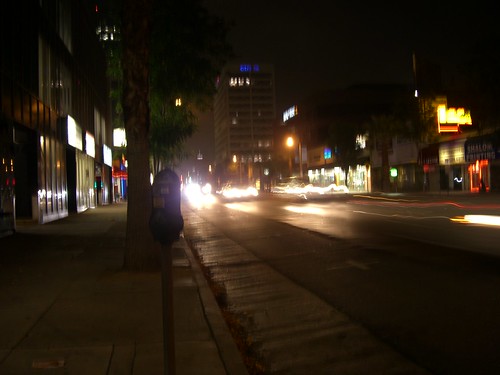
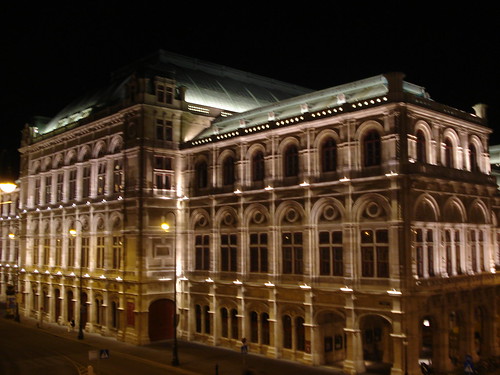
If the old photograph rendered its subject spectral, as Walter Benjamin never tired of emphasizing, and which the spirit photographers of the late 19th century literalized, I feel like the average little digital photos we take now on our simple digital cameras (preferably on a night out) show us (again?) that this spectralization was always filtered through the technical. Put more clearly, while the spirit photos of the late 19th century literalized the spectrality of a technology, the pleasure we take in many digital photos now is one of literalizing the technical nature of this spectrality. This is a pleasure that will probably disappear very soon with the advancing sophistication in digital cameras, but still remains most visible in pictures of the night.

Here I just want to call attention to the fact that we might be almost at the end of this interesting period in photography--as I'm sure many people more specialized in the field than me have probably noted. It is not unlike the end of the era of 8-bit images, which we now nostalgically look back at. These are, incidentally, captured well by Michael Wolf in his monumental The Transparent City: the grid-like structures provided by buildings (which were much more oppressive in his The Architecture of Density)

here are able to be filled in, just like in any little 8-bit graphic. Accordingly the detail shots of the people who inhabit these buildings are extremely pixelated:

The particular inability of the digital image to capture phenomena, however,--and especially at night--which produces a clearer image in some parts and a longer-image exposure in other areas, along with the play of light and even the iridescent vein-like outlines and scale-like squares of compression will perhaps be gone soon too, only to make a comeback. The pictures allow us the sense that the disoriented feeling, that ghostlike feeling, of life is not just due to the fact that death inhabits it--this was spirit-photography's point. What digital photos allowed was the sense that this death in life was technical, was due to the immense amount of mediation that our experience has undergone in the last few years.
At least this is the only way I can explain the amazing fact that over the years as the technology has gotten better these phenomena of the digital photo became more fun to see. As cameras adjusted the image already as you were taking it to stabilize it and prevent problems of underexposure and blurring, one began to take pictures in such a way that one was negotiating with the camera, working with and against it, in an extremely organic way. The pleasure you took in the odd blurred photo then (which was only blurred in certain areas to a certain degree), was in the fact that something could escape and emerge out of this dance. But the fact was that at the same time what emerged would have to be even more technical, or produced by the errors and creativity in the technology. That is, taking pictures became more than ever relating to the abstractness of the machine which actually performed it. The surprising over-exposure, or underexposure, or blur, would be brought to you the more arbitrarily and randomly the you manipulated the device. In short, what is special to to this particular digital image, I think, is that the texture of the photo is brought out, often, but not on the surface, like it is in wonderful gritty (and undersaturated) photos of New York, for example, in the 70's.

In the digital photos the texture is, because it originates in the back and forth in the algorithms and not in the actual mechanisms of the camera, more tightly imbricated with the particular objects photographed. The texture, the surprise, is more in the things than in the medium. And what's more, its totally without pretension, without setup. (The use of the flash gets rid of this effect sometimes while keeping, or perhaps even emphasizing, the hand-held nature--American Apparel figured this out, taking it, of course, from amateur porn. The processing of the camera that is involved without the flash seems to take longer and be more involved, thus becoming more and more technical. Flash brings back the surface, in other words.)
Perhaps this is due to the fact that what was being integrated into these photos was not the eye, but the hand--digital photography became, as it became more handheld (like it did with the 35mm cameras of old), a more bodily experience. This would correspond with the notion that the technical mediation of experience was everywhere, or is at least more tactile, and therefore not just in the eye. Regardless, photos such as the one above--someone else's experiences in Paris that I just stumbled upon randomly--and some like the following


will remain my favorites long after the stabilization techniques overtake our ability to work against them (and with them) manually, thus making all the images of night fixed and clear.

Thursday, December 11, 2008

Derrida on Heidegger and technics

In 1986 Derrida was at Yale and had various discussions about Heidegger that allowed him to consolidate his thinking. In 1987 these discussions were spun out a bit in his contribution to conference or joint-discussion entitled "Reading Heidegger." Derrida presented what he came up with the year before. This was published in Research in Phenomenology ("On Reading Heidegger," #17: p.177). David Krell outlines in the following what Derrida was saying at this conference, which hit at four points: as Derrida said, "four threads are to be drawn out here, emanating from four areas of hesitation and disquiet in my current reading of Heidegger..." I want here to focus on the second of these points, which Derrida specifies as "the privilege of essence in Heidegger's account of technique and the necessary contamination of essences."
I've tried in previous posts and papers to sketch certain aspects of the relationship between Derrida and Heidegger's notion of technics. My conviction is that Derrida has a lot to offer us thinkers of the philosophy of technics or technology, or philosophical thinkers the ramifications of technology, more than we expect. He also has a lot to offer Heideggerians, I think, for whom a Heideggerian formulation of technics remains perhaps the most crucial and lasting contribution of Heidegger's later thought. I think this is the case even though others see Derrida's contribution to technics being something more along the lines of providing a narrative of hominization, like Bernard Stiegler.
This does not interest me as much: I fundamentally don't think Derrida's thought hits its hardest there. For me, it is in the second point around C, in the outline below, which is the most crucial, because it extends a notion of technics to all of phenomenological thought: "withdrawal, reserve, reticence, holding-back, may well be a strategy of protection." He means a Heideggerian strategy of protection against contamination by technics (the non-essential technological aspect of technics). In other words, Heidegger performs what he says: withdrawal also, at the level of his discourse, his text, withdraws (from contamination).
But things don't stop with just this. For what this allows us to ask is the following: What could it mean to think withdrawal otherwise than as protection? This is what Derrida is getting at, this is what he thinks Heidegger falls a little short of doing. And it's understandable, for to think withdrawal otherwise than as protection against technology would be to think withdrawal as a function of technology, as permeated by the technical. This would in turn make the phenomenon itself--which is self-veiling or withdrawing--technical. A technical phenomenon: this is what it is impossible for Heidegger, and incumbent upon Derrida, to think. One then can think of a technical phenomenology, which would not look so much like the scientifically aided heterophenomenology of Daniel Dennett (as venerable and useful and amazing as that is), but more like grammatology, that science the impossibilities and possibilities (as impossibilities) Derrida looked at long ago.
Regardless, this is my case for looking at Derrida as different than Stiegler in his emphasis, which I think (as the two last volumes of Technics and Time recently made their English-language appearance) actually makes him more and more relevant for thinking technics in a unique way now. Here then, is the outline of what Derrida said then was his second point of hesitation about Heidegger:

II. The privilege of essence in Heidegger's account of technique and the necessary contamination of essences:
A. Heidegger avers that the essence of technique is nothing technological : his thinking of technique as such and as an essence tries in a classically philosophical manner to shelter the thought and language of essence from contamination.
B. Yet can anything in language and in thought be sheltered absolutely from technicity? In the very will to protect oneself against "x" one is more exposed to the danger of reproducing "x" than when one tries to think contamination.
C. Contamination, a contagion born of contact and a kind of touching, foils every strategy of protection; it puts at risk the central theme of Heidegger's thinking--that of the ontological difference.
1. Being's difference from beings is itself dissimulated in beings, and thus appears to be a kind of contamination. Yet Heidegger would insist that contamination is merely an "ontic" scheme, a mere "metaphor."
2. The Heideggerian figure of Being's self-veiling, its withdrawal, reserve, reticence, holding-back, may well be a strategy of protection.
3. Contamination requires the thinking of a kind of différance that is not yet or no longer ontological difference.

Tuesday, October 28, 2008

A tribute to Hedonismbot

Probably the most amazing joke (of the many many of them) in Futurama is the Hedonismbot: a robot that embodies all the auto-affectivity we fear in machines, such that we can't understand why the hell anyone would make him. That is, with no function other than to provide for his own pleasure, Hedonismbot is absolutely superfluous from the standpoint of man--in this he is actually the embodiment of the most mechanical aspect of the mechanical, insofar as the mechanical is only constituted in contradistinction to the human. Who knew we'd meet the mechanical as such in this: not just a machine that is autonomous, but in a machine that can enjoy itself, since his pleasure, more than his autonomy, escapes the circuit of desire as constituted both traditionally (in the history of metaphysics, especially including Epicurianism), and in modern theories of pleasure (psychoanalysis, for example, which cannot conceive of this pleasure apart from the pleasure principle that emanates and ends in itself--that is, except as the death drive). (What's also interesting is that he is the embodiment of pleasure, not just mechanicity, as such.)
And, on top of all this, HE IS HIS OWN CHAIR!

Thursday, July 3, 2008

Derrida, Heidegger, Nietzsche, Sex, part 1

For a couple weeks now I have been thinking or circling about a certain passage in The Animal That Therefore I Am, and its relation to a certain motif, a certain problematic, that stretches itself through Derrida's entire corpus, indeed announcing itself (quite literally: you can find it there in the text), if not always, then with surprising frequency.
It itself was largely the subject of a series of seminars on philosophical nationalism Derrida held in the late 80's. Hopefully these will all eventually be published. But the motif or problematic I am talking about is not just confined to the issues it involved and which these seminars (and the articles and works explicitly published around them or with reference to them, which included Of Spirit and The Politics of Friendship)--that is, sex or all the words centering around Geschlecht, including sex, gender, race or breeding, nation--so much as an issue revolving around Nietzsche, Heidegger, and the problem of reproduction and biology and/or technology which extends much further than the apparent (that is, explicit) reach even of (this subject of) Geschlecht.
(In The Politics of Friendship, Derrida says the following, which approximates--and yet I wonder whether we might ever get an abstracted, pure formulation of this, outside of any text, any project like The Politics of Friendship--the problem or motif I am trying to get at, but as a particular conceptualization and/or question of politics:

The concept of politics rarely announces itself without some sort of adherence of the State to the family., without what we will call a schematic of filiation: stock, genus or species, sex (Geschlecht), blood, birth, nature, nation... This is once again the abyssal question of the phúsis, the question of being, the question of what appears in birth, in opening up, in nurturing or growing, in producing by being produced. Is that not life? That is how life is thought to reach recognition.
-The Politics of Friendship, viii.)
First, the passage. Derrida is talking about how the issue of whether and how an animal could see itself (and perhaps see itself naked, i.e. feel shame) within a mirror, whether it can apprehend its own reflection--how this issue is not found discussed in any discourse of a philosophical type (with the exception of Lacan, who ends up saying that the animal actually does not "see"). He suggests that this is because these discourses would have to "know for certain" the following:

Where do the mirror and the reflecting image begin, which also refers to the identification of one's fellow being? Can one not speak of an experience that is already specular as soon as a cat recognizes a cat and begins to know, if not in the end to say, that "a cat is a cat?" Does not the mirror effect also begin wherever a living creature, whatever it be, identifies another living creature of its own species as its neighbor [prochain, also "its next"] or fellow [semblable, also "its likeness"]? And therefore at least wherever there is sexuality properly speaking, wherever reproduction relies on sexual coupling?
-The Animal That Therefore I Am, 59.

It is this last sentence which made me think. It brought me around to that motif which I began to think about seriously when writing a paper on The Gift of Death--if only because it seemed like I had always thought along the lines of the necessity that the motif indicates, it captures and thematizes so very well the general experience that one has (and I certainly had) while reading Heidegger's Nietzsche. Indeed, in The Gift of Death, one finds a refrain of sorts that goes as follows: "that would be more Nietzschian than Heideggerian." So one finds, while Derrida is discussing a claim of Patocka's:

Heidegger would never have said that metaphysical determinations of being or the history of the dissimulation of being in the figures or modes of the entity developed as myths or fictions. Such terms would be more Nietzschean than Heideggerian.
-The Gift of Death (Second Edition), 39.

The refrain is important in this text for two reasons: 1) Derrida rarely economizes in this way by referring not even to the proper name but to the type or kind of discourse that is generally assumed to be that of a particular proper name--though The Gift of Death is indeed a rare text, full of many other rare instances of economizing, precisely--and 2) Nietzsche, as my friend Sand said to a class that included me several months ago, plays a crucial part in this book, if it all in fact does not wholly stand or fall with its take on Nietzsche.
But the importance is not just local: reading it, I remembered a phrase all the way back in Of Grammatology which seemed to bear upon this very refrain.

Radicalizing the concepts of interpretation, perspective, evaluation, difference, and all the "empiricist" or nonphilosophical motifs that have constantly tormented philosophy throughout the history of the West, and besides, have had nothing but the inevitable weakness of being produced in the field of philosophy, Nietzsche, far from remaining simply (with Hegel and as Heidegger wished) within metaphysics, contributed a great deal to the liberation of the signifier from its dependence or derivation with respect to the logos and the related concept of truth or the primary signified, in whatever sense that is understood. Reading, and therefore writing, the text were for Nietzsche "originary" operations... with regard to a sense that they do not first have to transcribe or discover, which would not therefore be a truth signified in the original element and presence of the logos, as topos noetos, divine understanding, or the structure of a priori necessity. To save Nietzsche from a reading of the Heideggerian type [my italics], it seems that we must above all not attempt to restore or make explicit a less naive "ontology," composed of profound ontological intuitions acceding to some originary truth, an entire fundamentality hidden under the appearance of an empiricist or metaphysical text... Therefore, rather than protect Nietzsche from the Heideggerian reading, we should perhaps offer him up to it completely [my italics again], underwriting that interpretation without reserve; in a certain way and up to the point where, the content of the Nietzschean discourse being almost lost for the question of being, its form regains its absolute strangeness...
-Of Grammatology (Corrected Edition), 19.

If we ignore the Saussurian language regarding "the liberation of the signifier"--this has been too much commented upon, in my opinion--we find that there is a proposal for rebelling against the Heideggerian reading of Nietzsche, and in a unique way (that annuls itself or self-destructs as rebellion--we will return to this later): that is, much of what will become Spurs. But before turning to that text--another in the motif we are establishing--we must ask, Why does Derrida propose (to take back) this rebellion? Why should we protect Nietzsche from Heidegger in the first place?
It is not that Heidegger's reading of Neitzsche itself fails to give due credit to certain crucial aspects of Nietzsche, namely those "nonphilosophical" ones Derrida speaks of--essentially his engagement with positivism (psychology) and his appropriations of Darwin. This would be, fundamentally, Deleuze's objection to the Heideggerian reading, along, perhaps, with Foucault. It is not, then, the oft noted fact that Heidegger takes the "late" Nietzsche, the most rigidly philosophical or schematic Nietzsche, the Nietzsche of The Will to Power, as the useful Nietzsche (indeed, if one wanted to really make this argument, one would encounter much opposition from the fact that Heidegger does interpret much early Nietzsche, if not so much in his two volumes on him then in other texts, where he usually brings in most of the corpus--the early writings and even some early fragments, not to mention much of Zarathustra). This despite the unbelievable extent of the prejudice against these aspects of Nietzsche that Heidegger expresses so often in his later work and so (there is no other word for it--though "hastily," "unthinkingly," "inappropriately," "misleadingly," "slanderously" all come to mind, and I use this one precisely to call up or recall what Heidegger himself said of his affiliation with the National Socialists--and I would argue this is just something basic about Heidegger, to be reviled and unceasingly argued against rather than mocked or dismissed, because it is right beside the brilliance of his interpretations) stupidly in remarks like the following: Nietzsche's philosophy, he says,

rests on strange foundations. These foundations indeed show themselves to be based on a quite ordinary and metaphysically highly questionable "psychology." Yet Nietzsche can afford that.
-The Fundamental Concepts of Metaphysics: World, Finitude, Solitude, (Heidegger's winter 1929/30 seminar), 74.

No, Derrida does not reject this regarding Heidegger's Nietzsche. Nor does Derrida here directly reject what this move of Heidegger's is affiliated with--a suspicion about representation in general, and about die Zeit des Weltbildes--which Derrida often critiques (cf. "Envois" in Psyche: Inventions of the Other, Volume I for an amazing extended discussion of "The Age of the World-Picture"). It is more complicated here than the particular characterization of Nietzsche as a thinker of being as will, as calculable representation, that Heidegger will often lament in his sketches and essays on the history of being.
The rejection is at once more simple and infinitely more profound--this is why it will have to be taken up again in Spurs, as well as--indeed--the rest of the Derridian corpus: it is too much to the side of the main theses of Of Grammatology to be examined with the attention it deserves (and indeed this is why it can here be so directly). Derrida dismisses the idea that things in the world must, for Nietzsche, have their sense in being--and this is precisely what Heidegger concludes must be the case. In other words, things in the world (I have to use this awkward phrase because to use "what exists" or "beings" is already to submit to a Heideggerian interpretation) do not admit of looking any deeper behind them for what their residence in the world is grounded within (even if this ground is an ungroundedness, an abyss, an Abgrund). And this "looking deeper" for a ground is precisely what Heidegger always does with whatever Nietzsche asserts about the world (again, precisely by conceiving of its ground as ungrounded: to assert that Derrida is wrong because he misses this aspect of Heidegger--which I have seen happen often, especially on the part of Heideggerians--is to willfully misinterpret what Derrida is saying). For Heidegger, the things in the world from Nietzsche's perspective are indecidable with respect to their sense, their meaning--and this, however, is precisely their meaning: whatever is there, even if it is only an upsurge of becoming, has being, in the sense that it is not nothing. In the end, Heidegger thinks that if what becomes is not nothing, it must have being for Nietzsche on some level. That is, until Heidegger starts to entertain certain thoughts even beyond enowning (Ereignis) seriously. But we will (have to) come to this later.
Now, again, we are not circling around an exact interpretation of what "becoming" means in Nietzsche--and if it sounds as if this is the case, it is due to my lack of mastery over what I want to say here. But this term (becoming--and, indeed, how it relates to being) is not the point of the contestation (I outlined Heidegger's view of this with more precision--that is, with respect to eternal return and will to power--in a post last summer). If it were, then it would be an issue of either of the two objections we already specified (Deleuze and Foucault's, for example, and another Derrida's). Rather, in this passage of Of Grammatology, and throughout the sort of debate running through Derrida's corpus that I would here like to trace, there is an issue over the precise way things mean or have sense in Nietzsche's view and how we ourselves should interpret it--in short, it's much more basic than any debate over meaning, precisely because its about the most basic sense of meaning (if that means anything). What is at issue is an approach to Nietzsche, and whether it does not admit of another--a wholly other--way of approach. It comes down to this difference: if we were to take Heidegger's standpoint, we would suspect that whatever becomes, at some basic level (perhaps the level of attunements, which are not conscious), would still exist rather than not. What Derrida is advocating for, on the other hand, is the interpretation of becoming (that is, the things in the world) as a suspension of this being or meaning, even at this most basic level that Heidegger would be looking at. The indeterminacy with respect to meaning then would not be something that could be grounded even in what is ungrounded. It would be both indeterminate with respect to whether it is or meant, and indeterminate with respect to whether it was not (i.e. did not exist), or was not meaningful.
The entire discourse of Nietzsche, then--i.e. whatever he said about anything--would have been indeterminate. (This, by the way, is the fundamental thesis of Spurs, to which we will return).
This makes it more than clear that the stakes in this similarly naive-sounding "Such terms would be more Nietzschean than Heideggerian" are actually very high.
But before getting into this more, we must first ask about this detour I took with Derrida into Nietzsche and Heidegger--at bottom a detour towards a proposal for a saving (or not saving) of Nietzsche from (and by) Heidegger--and why I was reminded of it by a sentence on a discourse on animals. I say that there is a relation between the passage in The Animal That Therefore I Am and this this proposal. I will specify this relation--as well as develop this motif (by looking at remarks in both Spurs and Of Spirit, as well as the "Geschlecht" series of essays) in three or four more posts.

Sunday, June 22, 2008

News, death, speed

There is a semi-interesting little article in the business section of today's Times about NBC's attempt to try and delay the news of Tim Russert's death for about three hours until the family could be contacted and news pieces could be assembled for the network to air. And, of course, about the failure of these attempts: some low, low level NBC employee posted it upon Wikipedia about 45 minutes before NBC could make the announcement, and news outlets like the Times reported it shortly thereafter.
Now, the article laments this, of course: a new agency "traditionally" are allowed to announce the death of one of their staff before other agencies report or cover it. But besides the assumption that there is anything like a tradition in the media (in the sense of tradition that the article conjures up), or that there is only substantial grieving through something like a tradition, it implies that the speed with which information is disseminated now along something like the internet and its new, flexible social networks (like Wikipedia and MySpace) makes this substantial grieving less possible. It doesn't deny that there is grief able to be disseminated along these paths of information--to its credit, though it seems to do this only reluctantly. But what is crucial is that it assumes that the dissemination itself is not an act of grieving, which I think makes it impossible for it to think of a grief moving fast.
This is part of a larger assumption about the human registration of anything in general--let's call it an assumption about thought (though of course this thought is open to affects or attunements, as Heidegger would put it): thought only occurs when it moves over something slowly. Meditation, pondering--these words conjure up images of slowing down, of checking the haste with which we are going to grasp something.
But perhaps the quick registration of a fact on Wikipedia is precisely an act of thinking about the bereaved? People set up candles on their window or wear a pin, but the relative swiftness with which these acts are to be accomplished doesn't mean they aren't acts coming from a thinking about loss. This labeling, this noting, this marking is not necessarily disrespect. I would suggest it is merely another extension of technical thought--that is, thought thinking as technology, which means primarily as speed, haste, mere marking or registration. To deny it the status simply because of this speed does not seem to me to be either moral or accurate.
But this does not mean every registration of a bit of information (here, about the lost) is thinking (and, here, grieving). To be more precise, it means that the registration of something itself, even if it makes its way slowly through a process of what we normally call "pondering," is commensurate with thinking. Thinking, therefore, would be not commensurate with the act of thought, of a registering, a developing, a transforming, even, of what is registered. It is neither an internal process of complication and unravelling, or an external sort of epiphany, something commensurate with perception, a striking, a sudden grasping. A thought, for me, seems to take years, in which many other things happen. This does not mean that a thought like this is slow, precisely because it can be each time a return to something, to a mark, if only for a moment.
The development of a thought would be more like acquiring a habit, in this view, but it could be something achieved remarkably quickly as thinking. In this way, the efforts of people to spread this information would be beginnings in the process of grieving: not in the sense that the registrations have no meaning in themselves or are not themselves thoughts about the lost person, but in the sense that a full thought about the dead might require many quick actions of thinking, actions that do not make the thought itself take a long time but which develop its texture and its uniqueness. If he thought of grief this way--and it has an affinity with ritual, but not ritual as "what needs to be simply undergone" in order for grief to occur--there would not be such a lament here on the part of the writer of the story. The way we grieve now can be quick--and without being shallow.
I'll elaborate on this somewhat hastily written post perhaps later when I talk of close reading as something that can be done fast.

Thursday, May 29, 2008

The animal mechanical: Nietzsche

The following is a very famous passage from The Anti-Christ. Let's look at it yet one more time, for it bears upon our understanding of both technology and animality massively. It especially constitutes an association, a particular orientation of motifs (by extending that association that is made first in Descartes), that will be explicitly dealt with by two of the most important theorizers of technology in the twentieth and twenty-first centuries: Heidegger and Derrida. With the latter, one should read it alongside the entirety of L'Animal que donc je suis (à suivre) (The Animal That Therefore I Am, to be released in full in a few days). And though he does not seem to be as related to the two when it comes to being a theorizer of technology, one has to--in a completely different, but perhaps infinitely more interesting way--try and include Foucault in this group. One has to precisely because his work is largely an expansion of the domain in which the following orientation of Nietzsche's is set up. We might add that in Foucault this occurs not only in the development of his problematics of micro- and bio-power, but also and perhaps even more pressingly in his notion of a discursive formation (which appears very removed from power in general). But, to begin to turn back to this association or constellation of motifs and their being picked up by the great thinkers of technology: Derrida in his lecture puts this whole motif together when he recalls the opening of the second section of On the Genealogy of Morals: "Nature is said to have given itself the task of raising, bringing up, domesticating and "disciplining" (heranzuchten) this animal that promises." But, to return to the passage in The Anti-Christ itself: let us pay attention to two (or three or four) words in the following especially: machine (machina and Nietzsche's own "translation" in the last line: machinal, which gets rendered as mechanistically) and calculate (and miscalculate: all the cognates of rechnen):

We have learned differently. We have become more modest in every way. We no longer derive man from "the spirit" or "the deity," we have placed him back among the animals. We consider him the strongest animal because he is the most cunning: his spirituality is a consequence of this. On the other hand, we oppose the vanity that would raise its head again here too — as if man had been the great hidden purpose of the evolution of the animals. Man is by no means the crown of creation: every living being stands beside him on the same level of perfection. And even this is saying too much: relatively speaking, man is the most bungled of all the animals, the sickliest, and not one has strayed more dangerously from its instincts. But for all that, he is of course the most interesting. As regards the animals, Descartes was the first to have dared, with admirable boldness, to understand the animal as machina: the whole of our physiology endeavors to prove this claim. And we are consistent enough not to except man, as Descartes still did: our knowledge of man today goes just as far as we understand him mechanistically [machinal]. [...] The development of consciousness, the "spirit," is for us nothing less than the symptom of a relative imperfection of the organism: it means trying, groping, blundering—an exertion which uses up an unnecessary amount of nervous energy. We deny that anything can be done perfectly as long as it is still done consciously. The "pure spirit" is a pure stupidity: if we subtract [rechnen... ab] the nervous system and the senses—the "mortal shroud"—then we miscalculate [verrechnen]—that is all!
-The Anti-Christ, 14; Kaufmann's translation.

First, the play on calculation, on this act of programming and tabulating, which returns both in Derrida and could be said to govern nearly the entirety of the use of the word throughout Heidegger, including its use in Being and Time. If we reckon (the word comes directly from rechnen) such that we get rid of the nervous system and the senses from our sense of what we are, Nietzsche says, we do not reckon: if we rechnen... ab, we ver... rechnen--that is, taking ab- and ver- more literally than usual as Nietzsche invites us to do, if we subtract or deduct, we calculate awry. But what is so interesting about this play is that it is precisely showing the ineluctability of the mechanical: in a way, we are in fact always already calculating, because we are already calculating in such a way that we try to get rid of what makes us calculable--in a calculable way (subtracting).

To be a bit clearer and spell out the paradox that gets missed in the English (though Kaufmann tries valiantly to save it): in order to get rid of the senses and make man something that is only spiritual, we are already deducting, adding, multiplying (cf. what Nietzsche says a few sections earlier about pity being the multiplier of suffering), etc. We are sizing up man in terms of forces, in fact quantities, in order to be able to make a qualitative distinction of this sort. Thus: we only miscalculate according to Nietzsche because we (only) calculate. In other words, we do not miscalculate because we somehow have gone about our qualitative distinctions in the wrong manner--that is, theoretically put it out there in an impoverished or mistaken form. No--and we must add what he says in Ecce Homo, namely that error is not blindness but cowardice (merely--but this makes all the difference!--a lesser form of strength, power as a quantity of energy). In the end, this subtracting here is only finally expressed in theories. Thus, this calculation is taking place on the ground, as it were (and this does not disqualify theorizing and theory as forces at play here--the important thing we're noting is that theories and propositions of reason are not just the only things operative), in the domination of a certain set of bodies over another--the priestly as it has dissipated itself about, or made itself into the "herd." Instead of being an error in theory, this is an error in the constitution of an entire people (or, better, a set of biological/physiological forces), according to Nietzsche, precisely in their calculable qualities. It is these that Nietzsche shows, in the earlier part of the passage, are calculable--that is, able to be reckoned mechanically. Let us take a closer look at what he says here, in the German:

Was die Thiere betrifft, so hat zuerst Descartes, mit verehrungswürdiger Kühnheit, den Gedanken gewagt, das Thier als machina zu verstehn: unsre ganze Physiologie bemüht sich um den Beweis dieses Satzes. Auch stellen wir logischer Weise den Menschen nicht bei Seite, wie noch Descartes that: was überhaupt heute vom Menschen begriffen ist, geht genau so weit als er machinal begriffen ist.

What Nietzsche means by this is very basic--but it is precisely this that makes it an unbelievably profound understanding of Descartes: we can provisionally say that, according to Nietzsche, Descartes had the boldness to interpret the animal as a set of physical forces--in short as something that was constituted in a calculable manner. But we have to double back and look at the terms Nietzsche uses in order to substantiate this, for, as we will see, the way we understand the two appearances of the machine here interprets the entire paragraph for us. These two (more or less) appearances are constituted in Nietzsche's use of the Latin machina, and then of als er machinal begriffen. The reason why we speak so timidly about the number and the exact constitution of the mechanical here is because it is not clear what the relationshp of the latter phrase to the former Latin one is doing, nor what they themselves actually refer to individually. We can turn for help to the translators. Kaufmann leaves the Latin, and renders the last phrase as "understand mechanistically." R.J. Hollingdale turns machina into "machine," and renders the phrase provocatively as "our knowledge of man today is real knowledge precisely to the extent that it is knowledge of him as a machine." This directly makes this phrase refer back to the use of machina: according to this rendering, Descartes understands animal as a machine, and our knowledge of man is gained only by understanding him as a machine. Kaufmann's translation, on the other hand, collapses the whole phrase als er machinal begriffen into an adverb, but preserves the reference: this has the effect of setting up a tension between the two phrases. In short: Descartes did not understand the animal mechanically, as we do when we gain our only knowledge of the human, but instead understood the animal as having the essence of machina, of what is invented, of what is a contrivance or a creation.

The point is not to specify which translation is better, but to understand the problems at work here. Kaufmann is extremely delicate in trying to show the difference between the first and second reference to the machine, because that difference is there--not only in the use of the Latin but also in the use of the verb: in the first case, we have verstehn (know, in the sense of understanding) and in the second we have begriffen (know, in the sense of grasping). Descartes understands, we grasp. To this extent, we can say with Kaufmann that Descartes understands man as machina, while we grasp man mechanistically.
But we also have to specify, with Hollingdale, that what Nietzsche says is, more literally, not "just as far as he grasps...," but "precisely to the extent that he grasps as..."--this is how he translates it (substituting grasp back in there instead of either "have knowledge" or "understand"). While being more literal is by no means to be more accurate to the source text, it is true that Kaufmann loses a few crucial words (the crucial word als, especially) in his version by trying to lump them all together in an active word.
So, what to conclude from all this? With the first phrase, I side with Kaufmann (one should retain the Latin), and in the latter, I side with Hollingdale, though recognize the importance of the fact that Hollingdale loses something active about the phrase--namely, the fact that any understanding or grasping that we do would, in a sort of paradox that we explored already with calculation, have to be just as mechanical as the object we are grasp, because the object is us. And insofar as this is the case, we don't really have knowledge or understanding in the manner of Descartes: Descartes understands the animal as machina, therefore, while we do something different, more actively, in itself, already machina.

In the end, let us just explicate what it is trying to get at with this knowledge of the tension between the two phrases at the level of the rendering of the words themselves, expanding our initial reading of them. We can come up with the following: Descartes had the boldness to acquire knowledge of the animal as machina--as a construct, as an invention, as a functioning. In fact, it was precisely this that allowed him to distinguish the human from the animal: the human was more natural, less machine-like, more spiritual than the animal. The perversity of this gesture is, for Nietzsche (beyond the oddness that humans would be more natural than animals), in that it makes the natural precisely what is anti-nature: spirit. And what is more, it is obviously not consistent--it cannot be, nor would Descartes want it to be that way. We physiologists endeavor to prove how the animal is a construct, is, in short, a set of calculable elements or functions like forces, and to do so more consistently than Descartes by extending this into the human. The effect is double: it is to make the natural precisely what is mechanical, precisely what is constructed; and it is therefore also to restore naturalness to the human, by despiritualizing him (as it were) and interpreting him as a functioning just like this mechanical animal. It is in this sense that any knowledge or grasp of the human that we have now extends only to what we know of him as this construct, as this calculable set of forces--that is, insofar as he is natural and we interpret the natural as the mechanical. Now how one understands this last sentence comes about here, for one understands both the nature of one's understanding and how much the mechanical is exactly participating in the human. Instead of coming down on this phrase, I'll leave it somewhat open (I might come back to it later, and with my own rendering/translation of it), and simply point to a recent experiment ("Monkeys Control a Robot Arm With Their Thoughts") that does not specify so much as illustrate a particular way that we can understand this grasp. I would say that this is not the particular type of physiology that Nietzsche is thinking about, but that actually this experiment would indeed be included in its efforts. What is precisely so interesting and slightly disturbing about the experiment is that it merely is an extension of what is already there with respect to the animal, as well as the human: the animal is already a machine, in some way--and we too are visibly seen in the experiment as coming close both to this animal and this machine (that the animal is).

Friday, April 18, 2008

The technical relation


In a televised interview (printed in Echographies of Television, 113-7), Bernard Stiegler asks Jacques Derrida a brilliant question about some lines Derrida said in the above film:

In the film, in which you play yourself, you say to Pascale Ogier, your partner: "To be haunted by a ghost is to remember what one has never lived in the present... Modern technology, contrary to appearances, increases tenfold the power of ghosts." Might you elaborate on this statement: "the future belongs to ghosts?"


Derrida replies with the following:


...Phantom preserves the same reference to phainesthai, to appearing for vision, to the brightness of day, to phenomenality. And what happens with spectrality, with phantomality... is that something becomes almost visible which is visible only insofar as it is not visible in flesh and blood. It is a night-vision [translation modified]. As soon as there is a technology of the image, visibility brings night. It incarnates in a night body, it radiates a night light. At this moment, in this room, night is falling over us. Even if it weren't falling, we are already in night, as soon as we are captured by optical instruments which don't even need the light of day. We are already specters of the "televised." In the nocturnal space in which this image of us, this picture we are in the process of having "taken," is described, it is already night. Furthermore, because we know that, once it has been taken, captured, this image will be reproducible in our absence, because we know this already, we are already haunted by this future, which brings our death. Our disappearance is already here. We are already transfixed by a disappearance or disapparition which promises and conceals in advance another magic "apparition," a ghostly "re-apparition," which is in truth properly miraculous, something to see, as admirable as it is incredible, credible or believable, only by the the grace of an act of faith [translation modified]. Faith which is summoned by technics itself, by our relation of essential incompetence to technical operation. (For even if we know how something works, our knowledge is incommensurable with the immediate perception that attunes us to technical efficacy, to the fact that "it works:" we see that "it works," but even if we know this, we don't see how "it works;" seeing and knowing are incommensurable here.)

Saturday, April 12, 2008

Appendix to Williams


I just realized I left out a part of my argument in the post below, though I ended up hinting at it in what's there.
It is the explicit connection of the repetition I find in the lines of Crabbe to the anxieties over memory in Goldsmith, and the connection is made thus: Williams thinks Goldsmith's observational discourse, beyond being just an experience of memory, is also an experience of anxieties about tropes in poetry. In a way, Goldsmith wonders whether with the disappearance of the village, the ability of poetry to say anything unique (i.e. without turning what it observes--in this case village life--into a trope) is also lost. I find the repetitions of Crabbe, far from being some sort of evocation of the state of mind of the villager-turned-laborer, are instead instances of this sort of anxiety about tropes: the repetitions function at the most basic level to push any line of the poem towards troping itself. The anxiety in Goldsmith that gets concretized in this folding back of the poem on itself (and, we should note, not because "all poems are troping themselves," or something like this) functions as the only way that Crabbe can describe the villagers--i.e. functions in its turn as the element of the poem that reflects or instantiates Crabbe's own anxiety. This anxiety is more total (for lack of a better word) than Goldsmith: it has to do with the ability of poetry to turn what it observes into inspiration for itself, even in its resisting of itself (i.e. being a counter-pastoral). It is a question about not the constitution or being (we'll find this in Cowper) but the role of the past that Goldsmith discovers.
Hopefully all this (which should probably go right after where I read the repetition in Crabbe closely) will make the transition between Goldsmith and Crabbe (as Williams generally sees it) clearer, and show more clearly how Williams' approach sees things at the specific level of poetic form connected to the movements of history within that form.

Raymond Williams on Crabbe, Goldsmith, and Cowper


Meanwhile the rural ditties were not mute…
-Milton

The Country and the City’s account of Crabbe and Goldsmith cuts through an immense network of problems surrounding the use of pastoral to eventually lodge itself deep within the difficulties of relating to history and historicity that Cowper encounters in front of his oak. This path of the account constituted by the book’s opening chapters (most notably, in “A Problem of Perspective,” “Pastoral and Counter-Pastoral,” and “Nature’s Threads”) begins to be concretely established when Williams considers two lines from the beginning of the second volume of Crabbe’s The Village: “No longer truth, though shown in verse, disdain, / But own the Village Life a life of pain” (II.1-2). Williams asks two questions regarding them: “Where did it come from, that tone of apology about verse? Who was it aimed at, that insistence on the truth?” He then gives us a task: “Crabbe’s poem … needs to be read between these questions.” (The Country and the City, Oxford: Oxford UP, 1973, p. 13. Cited parenthetically as CC.)
In other words, Williams seeks to constitute a field where the feeling in what Crabbe articulates—namely, that pastoral verse has failed and will continue to fail to account for the pain of country-village life—plays itself out. But Williams does not see this field as merely reactionary, even though he brings Crabbe’s articulations under the heading of “counter-pastoral.” Counter-pastoral is not so much an interruption and overturning of a particular poetic genre by the creation of another as it is the embodied indistinctness of Crabbe’s articulations with respect to this genre—an indistinctness that actually may work to prevent any discernible break with pastoral. Counter-pastoral, for Williams, is thus a change in poetic form—in the most all-inclusive, indeterminate (and yet still determining) sense of this word “form:” whether considered as the governing principle(s) of the artwork or the structure of the elements that make it up, counter-pastoral is operative only within this particular range covered by the word “form” since it is more specific than a social attitude (though it expresses one) and less specific than the content of the work itself (though it can overlap with this and also, perhaps, be “in” content). I leave “content” unspecified, for this term of course varies with any definition of “form.” (For a discussion of the resonances of “form,” one should look at Williams’ entry “Formalist” in Keywords: A Vocabulary of Culture and Society. Oxford: Oxford UP, 1983. 137-140.)
I dwell on this point because correctly conceiving of this formal shift in Crabbe is key in showing how we can link him (or rather, the particular significance of his articulations) with Goldsmith via Cowper—which, I will maintain, is the audacious thesis of these chapters in The Country and the City. In short, I dwell on this point because it is our reason for considering Williams on these poets rather than the poets themselves: the field opened up by articulations like those in The Village, when conceived in Williams’ manner, allows us to consider some 18th century poetry in such a way that the developments of the thought around it (whether these be aesthetic theories or social chatter) and the roles it plays (whether these be within the sphere of material production and consumption or in debates on social values) inject themselves, as it were, into form. The upshot is that these thoughts and these roles thereby become immediately visible as form within the various poems as they develop through time one after the other (allowing us to track them within a period such as the 18th century in their various instantiations), and yet remain the function of apparently—when one looks at a poem to specify this thought or role there—non-chronological concerns (the “sense of place,” notions of “culture,” etc.). (I am of course (without pretending to know exactly what Williams’ verbiage means) referring to what governs the “structures of feeling” within the “keywords” of 1) “culture” as it gets analyzed in Culture and Society, and 2) also “place” in John Barrell’s amazing The Idea of Landscape and the Sense of Place—another work that has affinities with Williams’ approach. It should be obvious that all this is not directly a recommendation of Williams’ approach but an attempt to show how it (or those approaches like it—Bourdieu’s or some aspects of Foucault’s come to mind, though this requires substantiation) might impact the concerns of our class. Indirectly, however, it might seek to point towards the (somewhat recent) hint of John Barrell that some of the basics of Williams’ approach need to be revisited differently if (and perhaps only if) one finds that the current interpretations authorize an expansive “recovering” of historical documents to index the plurality of the representations of subjects involved in historical struggles at the expense of the representations of the subjects themselves. According to Barrell, this would be a recovery that does not recover, but merely works to “replace… the question of who won and who lost.” See his “Afterword: Moving Stories, Still Lives.” In The Country and the City Revisited: England and the Politics of Culture, 1550-1850. Ed. Gerald Maclean, Donna Landry, Joseph P. Ward. Cambridge: Cambridge UP, 1999. 231-250. One might (only?) then see if Williams can be recommended.)
From this perspective, Williams can define counter-pastoral positively, then, as poetry that continually insists upon its inability to idealize village or country life. I say positively, because this poetic insistence is the very form of a poem like The Village—the “reaction” to pastoral in the movement counter to it is not negative, so we can clearly specify it (there need be no hermeneutics of suspicion). This, then, is how Williams reads between these two questions in Crabbe: the particular logic (I hesitate to call it “logic,” for this sounds like it requires a rational structure. Even though it may be rigorously specified (even perhaps mapped, graphed and put in trees), Williams is far from claiming this logic is rational. On this point, I might emphasize that I am only considering Williams here with respect to poetic language, even though he also reads “between” prose. The level at which he analyzes in that field might not be the same. Williams, as far as I can tell, thus is not claiming that rationality or irrationality inheres in the logic of this poetic language)—the particular logic behind and yet within the lines “No longer truth, though shown in verse, disdain, But own the Village Life a life of pain,” gathers itself together at the level of the form that they both rely on, resist, and share in their inhabiting of it.
We can specify this formal charge (to borrow a formulation of Susan Wolfson's) or logic at both its more specific or general levels (as Williams does in his analysis). Here we will do so only at the specific level merely to illustrate (so while we use Williams’ analysis of the poem’s specificities, we are expanding it beyond him). In the lines from Crabbe, already Williams is able to pick up on a more specific aspect of the form which regularly appears throughout the poem: the quick repetition of either an entire word like “life” or, via the deployment of a combination of alliteration, assonance, the spondee, parallelism and the more specific figure of chiasmus, a series of repetitions of similar words within a line of two lines. Here, we see “Village Life a life;” but earlier in the poem we also find “They boast their peasants’ pipes, but peasants now, / Resign their pipes and plod behind the plough” (I.23-4); and “Here too the sick their final doom receive, / Here brought amid the scenes of grief, to grieve,” (I.242-3); and perhaps the most complex of these concrete instances (echoing the specific peculiarity of certain tightly formed chiasmic structures one finds in Pope),
There, where the putrid vapours, flagging, play,
And the dull wheel hums doleful through the day;
There children dwell, who know no parents’ care,
Parents, who know no children’s love, dwell there (I.232-5).


The irony of the playing of vapors among the children (it should be the other way around) is particularly evident here, though only after one revisits the whole sentence and, to a degree, grasps its form. We only meet the children after we get the intrusive repetition by assonance and alliteration in “the dull wheel hums doleful through the day,” and perhaps also the reversal in the last two lines, so that the poem calls us back to where the children are dwelling only after we have passed through the distracting intercession of the mechanical.
Now, one could generalize and say that the repetitive structures in the form of the poem here are an evocation of the type of psychic state of the villagers or of the type of the village’s social relationships when these villagers are treated merely as labor and given only rote tasks to perform: repetition mirrors or reproduces the feeling of the unfruitfulness and boredom that—we must say—according to Crabbe always hangs over the life the villager. But from Williams’ perspective, this would reduce the evident to evidence. For him, these repetitions at the formal level are, in (or rather as) their logic, “dimensions” of that field he specifies as counter-pastoral, “caught” by the poem (Williams uses these words with extreme care to set up many of his small but numerous quotations: cf. CC, 68-72). In other words, they are instances of a poetic insistence that pastoral has failed and will fail to account for the pain of rural life, as we said earlier.
It is at this level that we can ascribe what is articulated in these lines to Cowper—though it also is at this level we precisely cannot confine it to him alone. Indeed, this movement of counter-pastoral is a wider, and yet more delicate formation than any one author’s set of actions: according to Williams it finds its beginnings in Goldsmith and its most concrete or exemplary expression in Cowper. It thus moves at the level between material history and the history of ideas, folding itself at particular times and for determinate reasons back into one or another of these domains (which, Williams reminds us—though perhaps less often than someone like Bourdieu—are also our historiographical constructions).
We can only quickly indicate Williams’s treatment of Goldsmith as the poet at the beginnings of this counter-pastoral history. However, we can see how it immediately launches us into a consideration of Cowper as this history’s most thoroughly articulated (though perhaps also the most fragmented—two qualities that are not necessarily opposed by Williams) concretization.
Goldsmith’s endless comparisons between “now” and “then” (I put them in quotes because they are quite vague and act more as names than as things) form a stage in the transition from “reflection to retrospect” in the consideration of the country (CC, 82). Williams is quite clear how this transition is achieved (quoting The Deserted Village, ln. 397-8):
The poems to the happy tenant, the idealized and independent self of the reflective pastoral tradition, are succeeded by poems of loss, change, regret: that structure of feeling, at once moved and meditating, appalled and withdrawn, which is caught so exactly in Goldsmith’s couplet:

E’en now, methinks, as pondering here I stand
I see the rural virtues leave the land (CC, 68).


But, Williams contends, it is not achieved by Goldsmith himself. Notice how Williams instead points out at a more general level the precise point at which this transition is most active, that these lines (not merely, but concretely) mark: Goldsmith brings the entire scene back to his own vision as something taking place between now and then, as a concrete process glimpsed within the past that has just gone by, congealing into a memory like those the poet has of “then.” This “as pondering here I stand,” far from being merely a depiction of a scene of writing qua textual self-consciousness, is an instance at which the inscription gets taken up into a larger movement than any conscious “now,” yet more finely composed than that of “then.” This moment of composition, in its texture, is precisely that of a reflective movement turning into a sense of history or rather of historicity—of the flowing away and yet congealing of time into a recent memory. This is why the countryside in Goldsmith, according to Williams, becomes more of a spectacle, an “observation,” a “dissolving of the lives and work of others into an image of the past” (CC, 74-77): any possible violence of Goldsmith’s gaze upon the people and places he describes is due more to a basic and wide-reaching sense of the fleetingness of the old countryside itself than any sort of snobbery or privilege. The latter, while most definitely at play, obscure a more interesting phenomenon by reducing it to fit within a clean-cut framework.
We see now, perhaps, how problematic it is to stop at any reading of The Village as a mere attempt at a refutation of The Deserted Village: even though it does function as this, the dialogue (or possibility of a lack thereof—the two standpoints are indeed quite different) between the two poems is much more complex because, according to Williams, the formations or forms that they constitute are beyond themselves as much as present in their most elemental units (words, spaces, stresses), happening always “meanwhile,” though never remaining mute. Thus we must try and see their relationship in the following way: there is a moment in Goldsmith where the recent memory of the countryside pulls itself away from the “now” and the “then” as they function in his poem and proceeds to gather a thickness of its own—a thickness that, in Crabbe gets “pulled up,” as it were, and deployed in a form that both has a tone of apology and constitutes an insistence on its own truth. (I am using a term applied now more when someone is dealing with “windows,” “sites,” or “alerts” with computers—that is, in a space and time of the technical, of the hyper-mnemonic—and which, with this term’s combination of a verb-form and preposition, might fit somewhere between the Wiederbringen and Uberlieferung—that is, bringing-again and or handing-over—of Heidegger. See the section on historicity’s repetition in Being and Time: “Repeating is handing down [Uberlieferung] explicitly;” “The repeating of that which is possible does not bring again [Wiederbringen] something that is ‘past,’” Being and Time. Tr. Macquarrie and Robinson. Oxford: Blackwell, 1962, p. 437 and passim. However, I am here only giving some consistency to the idea of the time and space of Williams’ history by stressing its unnatural or out-of-joint character—though one should be hasty in mapping a thoroughly technical time completely onto Williams.’) In other words, the degree of the disappointment in the poem of Goldsmith as it confronts and becomes memory turns into—but by no simple process, occurring by means of the complex and unnatural temporality “hacked-into” by Williams’ historiography and literary analysis—the bitterness, the sense of mission, the shame within the poetry of Crabbe.
We can also see how it might be possible for Cowper to insert himself within this apparently non-chronological (one might be more accurate in saying that its chronology is different, and perhaps also goes “backwards”) field of formations, between Goldsmith and Crabbe (though, at the most extreme level and beyond Williams, one might perhaps say that, if conceived rigorously, in this field there are only “betweens” or “meanwhiles,” so “insertion” would be difficult to conceive—see above note). The movement of memory is again “pulled up” and pressed into such exact articulations that it poses new problems beyond the sphere of changes in the distribution of land in the countryside. In other words, the articulation has, in Cowper, caught up with the changes of which it is a function and in which it is a player, and has thereby allowed it to connect with other changes (of which it is a function and in which it is a player, etc.). According to Williams, these changes (which again, are thoroughly specifiable) are the role of the country’s nature in its more general relation to humanity, and in its own relation to itself: anxieties begin to grow as to whether humanity as a whole is alienated from any and every country:
What is at issue, really, is a dialectic of change. A much later poem [than Thompson’s The Seasons, under consideration in the chapter “Nature’s Threads”], Cowper’s Yardley Oak (1791), is in the main a traditional and melancholy reflection on history and the mutability of fortune, in the sight of the centuries-old oak that has become hollow and rotten. But there is an intermediate reflection, which seems to catch the dialectic of just the change that was being widely experienced:

Natures threads,
Fine, passing thought, e’en in her coarsest works,
Delight in agitation, yet sustain
The force that agitates, not unimpar’d,
But, worn by frequent impulse, to the cause
Of their best tone their dissolution owe.

This sense, of a dissolution within a lively and productive exercise, is exact (CC, 71-2).


Perhaps now we can see by what other criterions than his particular analysis in The Country and the City Williams judges this phrase “exact,”—and how they inform his extremely influential study of 18th century poetry.