Friday, January 11, 2008

Translation of Derrida

David Wills, despite being a wonderful translator of The Gift of Death, suppresses a lot of crucial aspects of the French in his rendering the following sentence (on page 70 of both the French and the English editions):

Des engines à donner la mort sans compter livrent une guerre sans front.

Wills translates this as:

Countless machines of death wage a war that has no front.

While this gets at the condemnation of the horrific deaths occurring every day over the claims of religions to the divine logos that is happening here at this stage in Derrida's text, it makes it sound as if the (interpretative) machines were bad in and of themselves. What Derrida is getting at is more subtle: he is saying that machines both without number (i.e. there are many of them, too many) and, more significantly, without calculation--sans compter--relate themselves to death. The play on sans compter is crucial because Derrida advocates a type of dissimulative counting or accounting for the other throughout the text: it is one of his main theses regarding the economy of the gift of death. These machines are being condemned because they refuse to account: and this is the only way in which Derrida follows in the tradition of the philosophical condemnation of machinery or technology. The only machine Derrida will condemn (and yet there are so many, an innumerable amount) is one that does not calculate.
Furthermore, this gift of death is there in the French sentence! Machines, without counting and without number, give death (donner la mort!). Wills is trying to suggest that any death given by a machine is not a gift. Derrida, however, is asking, "What would it be like for a machine to give death?" This machine would be, for Derrida, a dissimulative machine, a machine that calculates but that breaks its own mode of functioning, its law or its program, through that very calculation. It is only thus that it could relate to death as a gift, as something inscribed within yet exceeding its ability to account for it. I'm moving too quick--there will be another post that will outline this stuff in more detail. For now, let me just suggest a different translation:

Machines of giving death without number(ing) wage a war without front.

I can't really think of a good way to bring the "sans compter" into the sentence with its dual signification, so this will have to do for now (using number in the sense Derrida gives to it in the section on "Enumerating" in The Politics of Friendship). I'll get on it, however, and make something better--including a more computational, machinelike sense. One should also note that "front" can also mean "face:" so we are getting a war where the face of the other (in the sense that Levinas gives to this formulation and that Derrida discusses with respect to the front earlier in the text), is not present or able to be faced--it would truly be a machinelike waging of a war if machines, who have no face, are the ones that are putting to death. Any suggestions however are very welcome!

Tuesday, January 8, 2008

The big Marx, Hegel, Feuerbach post, part 6

To continue from last time, this entry being the culmination of the encounter between Feuerbach and Hegel, and having the promised appearance of some music:

...This all may seem tedious, but it is necessary to grasp in order to see where Marx is coming from when he refers to “materialism.” For what Feuerbach does next is show that Hegel did indeed ground the necessitation of the relationship between Spirit and the Absolute, but merely did not emphasize it: he grounded this necessitation precisely in what is seen by Feuerbach as material “nature,” that supposedly non-Spiritual category that is both prior to and outside of significance. This “nature” proves to be nothing other than what Hegel must refer to in Feuerbach’s eyes in order to fully develop the consistency of his God: not the Absolute in Spirit, but the principles that compose Spirit itself. It is thus clear to us why this is such a revolutionary overthrow of Hegel, and why this changes the whole essence of God “as a religious object:” if Hegel specified what “nature” was, then God, the culmination of Spirit, would issue forth necessarily not from His own essence (the essence of the Absolute), but only from the completion of Spirit insofar as Spirit itself completes itself only in accordance with its presuppositions. Instead of the existence of God and the meaningful found within the self-developed principles of Spirit (the layerings of meaningful action that produce later layerings), God would be the result of the “nature” that exists before and outside of these principles—in what makes these principles possible. To put it yet another way, if the principles that direct and propel Spirit’s development are shown to lead Spirit to a state of culmination, then calling this state of culmination “God” will not be arbitrary. Nothing will exist other than this culmination, and since it culminates necessarily, it will be full, final, perfect. Thus the preconditions of Spirit, the structure that effectuates and provides for its development, its “nature,” are what are to be elucidated for Feuerbach, because they are what, instead of Spirit alone or by itself, will be considered real, since they make up God. All that needs to be done is lay the emphasis on “nature” instead of the Absolute when asserting the identity of the Absolute and Spirit, and Spirit will be organized from the ground up, and its culmination (God, significance itself) as well.
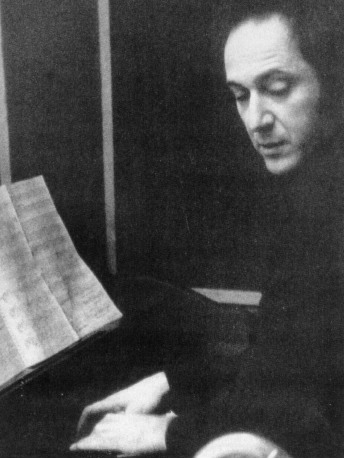
To digress shortly, we may remark that a good example of the difference between the two—an example one can experience for oneself—can be culled from the sphere of music. Hegel’s God is a symphony by Beethoven. Notes appear in one of these symphonies and move in both harmony and discord based on the genius of the compositional ideas that form them and break them apart: Beethoven composes a symphony to articulate and bring into a vocabulary of notes various ideas and feelings, letting them take shape in accordance with their meaning and intention. Take Beethoven’s third “Eroica” symphony. Composed in 1803, it is a grand statement about the nature of heroism and the hero, dedicated to Napoleon. Throughout the symphony, heroism as an idea is brought to music such that when the idea ceases its movement, when it is completely stated, the notes stop, and the symphony is over. Each section, each movement in one of these symphonies is one such statement of the author regarding heroism, organized around a discrete and distinct notion that occurs in his head, and together they make up nothing less than an epic series of articulations that convey this general idea. Led on by his own intentions, the symphony is Beethoven’s statement regarding Napoleon—this is such the case that after Beethoven (like much of Europe) witnessed Napoleon’s coronation of himself in late 1804, he supposedly scratched out the dedication to him on the title page of the symphony, giving the symphony itself a different meaning, a different intention. Now, turning to Feuerbach, we might say that he is advocating a type of articulation of meaning that would look like a composition by the British composer Steve Reich. In his “Music for 18 Musicians” (1974) Reich assigned various instruments a particular series of notes to play, a particular tempo to play them at, and a particular way to play them, and then simply had them begin and maintain that particular assignment. The result is a massive series of noises that are merely the collection of various instruments each keeping to and repeating their individual utterance. At any moment of the work, the 18 musicians are busy combining together their individual sounds in different permutations, and doing so only really because they are playing in the same room together. In fact, the entire work is the result of an exhaustion of all the possible permutations of the various instruments: when each individual instrument’s series of notes are over and played, they simply stop, and the end of the work is achieved when they all are simply done with. Thus, each movement of the music is a product of the maintenance of the original presuppositions assigned to each instrument. Each moment is organized from the bottom up, and does not express any idea other than that produced by the mathematical combination of the instruments. Far from being something led on by the genius of a divinely inspired mind articulating a vast meditation on the nature of heroism in his historic era, the composition of Reich is about the beauty of the ability of individuals to combine and create harmony out of nothing more than their own movements, out of their own natures. These works give some weight and definiteness to Hegel and Feuerbach’s ideas of God, embodying them, as it were.

Wednesday, January 2, 2008

Technics in The Gift of Death

At the beginning of the second section of The Gift of Death, Derrida recalls us to the question posed by the title of the text of Jan Patočka that he is in the process of reconstituting: “as the title of his essay indicates, Patočka asks why technological civilization is in decline” (The Gift of Death [GD], 35). Perhaps Derrida recalls this because we might expect the analysis within “Is Technological Civilization Decadent and Why?” not to depart from an explicit questioning of technology or technics and how it affects civilization. But this is precisely what it does: it quickly becomes the relation of a history of responsibility and religion that instead will only answer the question of what might be “a criterion, a standard by which we could judge something decadent” or not (Heretical Essays in the Philosophy of History [HE], 97). Thus by the end of the essay, if the question as to the decadence or decline of civilization still remains to be asked, the question as to the decadence or decline of specifically technological civilization seems barely posed. However, Derrida soon begins to alert us to how this history of responsibility and religion is dominated throughout by something that secretly acts as a proxy for technics.
As Derrida points out immediately after recalling Patočka’s title, this proxy can be localized in Patočka’s discussion of the rise of a “metaphysics of force” (HE, 119). He recounts that with this phrase Patočka is referring to the understanding of being that according to Heidegger supports the essence of modern technics (GD, 37). In many of his texts Heidegger outlines how, with the rise of reason as the privileged way of access to beings (reaching its peak with the Enlightenment and Industrial Revolution), these beings come to be understood or disclosed in their being only as units of power always already available to be calculated and then distributed across space and time. Technics takes this determination of beings and extends it rapidly: first, in machinery specifically, but also more importantly in the setting up and challenging of the world to exist in conformity with this principle of reason and this determination of beings. Technical reason as this setting up and challenging thus ontologically determines everything as infinitely calculable or quantitative as well as infinitely transformable—in short, everything exists as a force. What is crucial is that this specific determination is precisely coordinated to conceal any need for ontological determination at all: since all beings are set up in advance as quantities exchangeable with each other, it no longer matters what and how anything is.
Derrida stresses that this concealing in the metaphysics of force is what is important to Patočka, and that his handling of it is what distinguishes him from Heidegger. If, as we just said, force does not merely render everything calculable; if it does so in opposition to the ability to determine what a being is outside of calculation, it does not just eradicate the possibility for ontology: the metaphysics of force dissimulates it. Being is not only unnecessary, all access to it is covered up. Now, Heidegger would call this event of dissimulation another crucial destining of being—and thus in a sense a necessary dissimulation, a dissimulation in conformity to the essence of being itself as what mysteriously conceals itself. Thus, for Heidegger, this dissimulation would essentially not be a dissimulation. For Patočka, however, this event is of itself, by being constituted by dissimulation, “fictitious and inauthentic” (HE, 116). Thus, what conceals in the metaphysics of force is more thoroughly concealing for Patočka than for Heidegger. At the same time, it is also less concealing, for it turns being’s mere representation as a force as such into this very concealment. As Derrida says, Heidegger would never have claimed this: “Heidegger would never have said that metaphysical determinations of being or the history of the dissimulation of being in figures or modes of beings developed like myths or like fictions” (GD, 38, translation modified). The history of being for Heidegger is never purely reducible to the history of the representation of being in or as beings. For Patočka, however, force as a determination of being keeps being dissimulated merely in showing itself as force. If this is the case, then the mystery or concealment Heidegger places in the essence of being itself, which for Patočka does not govern the dissimulation present in the manifestation of beings, would be itself dissimulated: dissimulation would dissimulate itself. As Derrida says, according to the logic of Patočka’s discourse, “the mystery of being is dissimulated by this inauthentic dissimulation that consists of exposing being as a force, showing it behind its mask, behind its fiction or its simulacrum” (GD, 39).
In other words, through a reference to a metaphysics of force, which is at its center a technical metaphysics, Patočka constructs “a logic of secrecy” whereby, as Derrida says, what is concealed “is never better kept” concealed “than in being exposed. Dissimulation is never better dissimulated by means of this particular kind of dissimulation that consists in making a show of exposing it, unveiling it, laying it bare” (GD, 38-39). For Patočka, then, any and all secrecy depends essentially on the presence of a relation to a technical understanding of being. Now, throughout The Gift of Death, Derrida tries to demonstrate how Patočka’s history of responsibility and religion cannot escape being a history of secrecy. For Derrida, then, Patočka’s history of secrecy must also be a history of a rise of a technical metaphysics of force in the logic of that secrecy. Thus, the proxy that secretly acts within the history of secrecy for technics is secrecy itself.