Sunday, June 8, 2008

Derrida, Merleau-Ponty, depth, and the body, continued (more)

Continued from last time:

As Merleau-Ponty says in “Eye and Mind,” “the enigma is that my body simultaneously sees and is seen. That which looks at all things can also look at itself and recognize, in what it sees, the ‘other side’ of its power of looking” (“EM,” 162). This indeed is how vision itself visible, but we need to describe the process more precisely than as some sort of “recognition.” Merleau-Ponty in The Visible and the Invisible thinks of the problem this way: what we see in the world, the visible, is not a random assortment of stimuli, but, as he says above, “things themselves,”—by which he means primarily (that is, excepting the Husserlian registers of this phrase, which of course he is trying to refigure or transform by using it this way) that “I do not look at chaos, but at things” (VI, 133). This fact—so marveled at throughout Kant’s third Critique—reveals that if vision is going to occur, it presupposes that the visible be precisely that which is able to accommodate vision, or itself be, qua visible or viewed, the prefiguring of vision itself. In other words, though they seem like they are at a distance from us, things can be said to see, in the sense that they are not just viewed when vision or a look lands upon them, but instead are active participants in the view itself: they hold the gaze or push it elsewhere, and this is because they themselves only have existence—as we have noted above—as the visible that is currently within a particular vision. The redness of a dress is thus not “sensory datum,” when it as a thing gets translated into the realm of what is made correlative to the faculty of sight: the red dress itself is a “talisman of color” that “makes it, held at the end of the gaze… much more than a correlative of my vision, such that it imposes my vision upon me as a continuation of its own sovereign existence” (VI, 131). In short, the visible participates in vision in its prepossession of vision, as Merleau-Ponty says:

The look… envelops, palpates, espouses the visible things. As though it were in a relation of pre-established harmony with them, as though it knew them before knowing them, it moves in its own way with its abrupt and imperious style, and yet the views taken are not desultory—I do not look at chaos, but at things—so that finally one cannot say if it is the look or if it is the things that command. What is this prepossession of the visible, this art of interrogating it according to its own wishes, this inspired exegesis? (VI, 133).

He answers himself with the following:

Since vision is palpation with the look, it must also be inscribed in the order of being that it discloses to us; he who looks must not himself be foreign to the world that he looks at. As soon as I see, it is necessary that the vision (as is so well indicated by the double meaning of the word) be doubled with a complementary vision or with another vision: myself seen from without, such as another would see me, installed in the midst of the visible, occupied in considering it from a certain spot (VI, 134).

This last sentence will require more explication, but what is stressed here we can fully understand: the visible must have a sort of being that can flip or reverse itself into what has vision, into what undertakes seeing when the vision of the body lands upon it. It must be able to participate in the gaze as well as maintain its own provisional independence from that gaze, such that this visible is actually vision “installed in the midst of the visible.” As he says in “Eye and Mind:”

Vision happens among, or is caught in, things—in that place where something visible undertakes to see, becomes visible for itself by virtue of the sight of things; in that place where there persists, like the mother water in crystal, the undividedness (l’indivision) of the sensing and the sensed (“EM,” 163; OE, 19-20).

This undividedness, this reversible being, is what connects the body to the things around it—Merleau-Ponty calls it “flesh.” This term brings out how all vision is bodily, but how, because the body is like a thing or rather is of them, all visible things have the possibility of answering to vision as visible. Thus, as he remarks in “Eye and Mind:” “things are a prolongation of [the body]; they are incrusted into its flesh, they are part of its full definition,” and it is in this sense that, as he says immediately after this, “the world is made of the same stuff as the body” (“EM,” 163).

While we do not yet understand the opposite phenomenon that is really in question above—how vision itself turns into the visible—we can only approach it if we further develop this conception of how the visible turns itself into vision. In order to do so, we can turn to an example Merleau-Ponty gives, one that will begin to show us how painting is already extremely relevant to our discussion of the body (indeed, it is in “Eye and Mind” as well as in The Visible and the Invisible that this example is given). It is the example of tiles seen at the bottom of a pool—literally one of depth:

When through the water’s thickness I see the tiling at the bottom of a pool, I do not see it despite the water and the reflections there; I see it through them and because of them. If there were no distortions, no ripples of sunlight, if it were without this flesh that I saw the geometry of the tiles, then I would cease to see it as it is and where it is—which is to say, beyond any identical, specific place. I cannot say that the water itself—this aqueous power, the syrupy and shimmering element—is in space; all this is not somewhere else either, but it is not in the pool [that is, if one considers “in” as a spatial relation of containment between two masses, as one would in physics]. It inhabits it, it materializes itself there, yet it is not contained there (“EM,” 182).

What makes the water a visible thing is the thickness or depth that separates the surface from the bottom of the pool. This thickness is precisely the flesh of the visible and vision. What the thickness does to vision is pull and push it around—it is not passive—and it accomplishes this precisely by developing its own visibility. In other words, it does not leave its visibility behind to become this “syrupy and shimmering element,” and then return to it, but as visible, flips or switches into a thing that can also participate in gazing or vision—in the sense that it does push and pull on one’s sight. If were not to do this, it would merely be a distortion and deviation from sight considered within mathematical space. But then it precisely would not be depth, even in the sense in which we are talking about the depth of a pool—that is, in the sense of a mere spatial relation. What would be the depth of a pool as merely the difference between two points in space—even if we think of this space in terms of its fluid dynamics or how it is distorting light? Because the difference in space is precisely something with a sort of consistency in its potential to be meaningful in the context of a vision of a pool—because we cannot reduce the way it pushes and pulls upon our vision to Cartesian space—we must think of it differently. If we do this—and this is precisely thinking of it as flesh—it becomes a sort of spatial meaning (of the visible turning into vision, into our vision that we are seeing when looking at it) that takes place materially as the water itself. Thus this thickness or flesh of the water that includes it in our gaze as that through which and only through which we see is depth. “Depth” indeed still signifies the difference between the surface and the bottom of the pool, then: it just does not cut out everything that is qualitatively significant about the visible and which we now understand as the visible turning into vision.
The reason why this example is so important for us is that the depth of the visible in any vision, according to Merleau-Ponty, is the same way as the depth of the water. The interval between the vision and the visible, precisely as a relation of material space, is a positive thickness like the water—and this thickness is flesh, the way this space continually becomes part of the vision. And, as Merleau-Ponty continues to say, “this internal animation, this radiation of the visible is what the painter seeks under the name of depth” as well (“EM,” 182).

Saturday, June 7, 2008

Derrida, Merleau-Ponty, depth, and the body, continued

Continued from last time:

With this perspective on perception comprehended, can now finally turn to “the visible:” for what does Merleau-Ponty mean when he says that this unity of perspective, achieved through motility or movement, is precisely a movement “through the visible?” This is where Merleau-Ponty’s thinking in the fifteen or so years between the Phenomenology of Perception and The Visible and the Invisible comes into play, though the ideas of the latter work—as Derrida remarks throughout On Touching (OT, 210 and passim)—are very much present in the former. As Merleau-Ponty himself remarks in his working notes to the unfinished later work, the Phenomenology of Perception focuses more on how the body interacts with the world, and not how it is also, as he says in the above quote, “a part of it.” This is obviously because Phenomenology of Perception must show how the empiricist and intellectualist perspectives on the body are inadequate. Nevertheless, the crucial question remains and did remain the following within those fifteen or so years, as it was touched on and reformulated in other writings: how is it possible that the body is not only the materialization (as it were) of motility or movement but also, as he says soon after the already quoted paragraphs of “Eye and Mind,” “a thing among things” (“EM,” 163)—that is, precisely while still remaining this materialization of movement?
Now, Merleau-Ponty’s first step to try and answer this question is to change his terminology as he extends his perspective beyond Phenomenology of Perception. The “visible,” therefore, becomes precisely what has gone under the name of “the world” in our discussion of the body so far. However—and here is where the extension is operative—this new term is used with a crucial difference: the body is also of the visible. Merleau-Ponty thus effects a shift that refines the way we talk about the world and the body within it, because we now can refer to the world precisely as what is sensed or perceived by the body, or as precisely that which the body, in its movement, “makes a difference in,” as he says above. Thus the world’s character loses its last remnants of “objectivity”—as something standing over against the body, not already mapped somehow upon the senses—and gets thought with the body always as co-present, as it were, with any perception. In other words, one crucial result of the analysis in Phenomenology of Perception that we have not stressed in our reconstitution of its logic gets brought immediately to the fore: no world can exist, qua world, without a body that has its moving, roaming perspective upon and within it. No perception, no world. Calling this world “the visible,” then, brings this out nicely. We can see this logic in the shift take place (as well as recognized some elements of it that we have already traversed in different terms, like the “seeming obviousness” of the body) in the first paragraph of The Visible and the Invisible:

We see the things themselves, the world is what we see: formulae of this kind express a faith common to the natural man and the philosopher—the moment he opens his eyes; they refer to a deep-seated set of mute “opinions” implicated in our lives. But what is strange about this faith is that if we seek to articulate it into theses or statements, if we ask ourselves what is this we, what seeing is, and what the thing or world is, we enter into a labyrinth of difficulties and contradictions… (The Visible and the Invisible, 3).

Merleau-Ponty’s approach thus aims at what we see as it is implicated in what seeing is. Insofar as we are specifying what we see, implicated thus, we are (obviously, but again not so obviously) talking about the visible. Furthermore, we can now also say that insofar as we are talking about that side from which we are seeing what is visible, Merleau-Ponty talks about vision. This vision takes place in that unity still called the body. Thus, we now can somewhat understand the sentence of Merleau-Ponty from “Eye and Mind” above: “that body which is an intertwining of vision and movement.”
But, it might be said, the most crucial question has just been broached: neither the visible nor vision amount wholly to “what seeing is,” as Merleau-Ponty says. And at the same time, we have just extended the concept of the body further—by making it something that, along with the world or the visible, is also visible—but have not developed this point. We shall see that it is precisely by combining these two points that we arrive at an understanding of that still-enigmatic word “intertwining,” which defines the body and brings the visible out for us more richly as something that is crucial for painting. In other words, it will be precisely through understanding how the body, in its vision, itself is visible that we will understand that total act of seeing which is the fuller, richer concept of the body as it operates in Merleau-Ponty’s later work... (To be continued...)

Friday, June 6, 2008

Two on memory

Two notions of memory, history:

Heidegger's 1941 seminar Grundbegriffe on ontological difference and the fragment of Anaximander:

Being re-members us into being and about beings, so that everything we encounter, whether experienced as present or past or future, each time first becomes and remains evident as a being through the re-membrance of being. Being thus remembers essentially. Being is itself what re-members, is the proper remembrance.
We must indeed consider that being itself is what remembers, not only something about which we remember, to which we can always return as something already familiar in the sense of Plato's άνάμνησις [anamnesis]... We must perceive that being is not an "object" of possible remembrance for us, but is itself what properly remembers, what allows all awareness of anything that comes into the open as a being.

-Basic Concepts, 55-6 (translation modified)

And W.G. Sebald's (narrator's) account of the Fort Breendonk in Austerlitz:

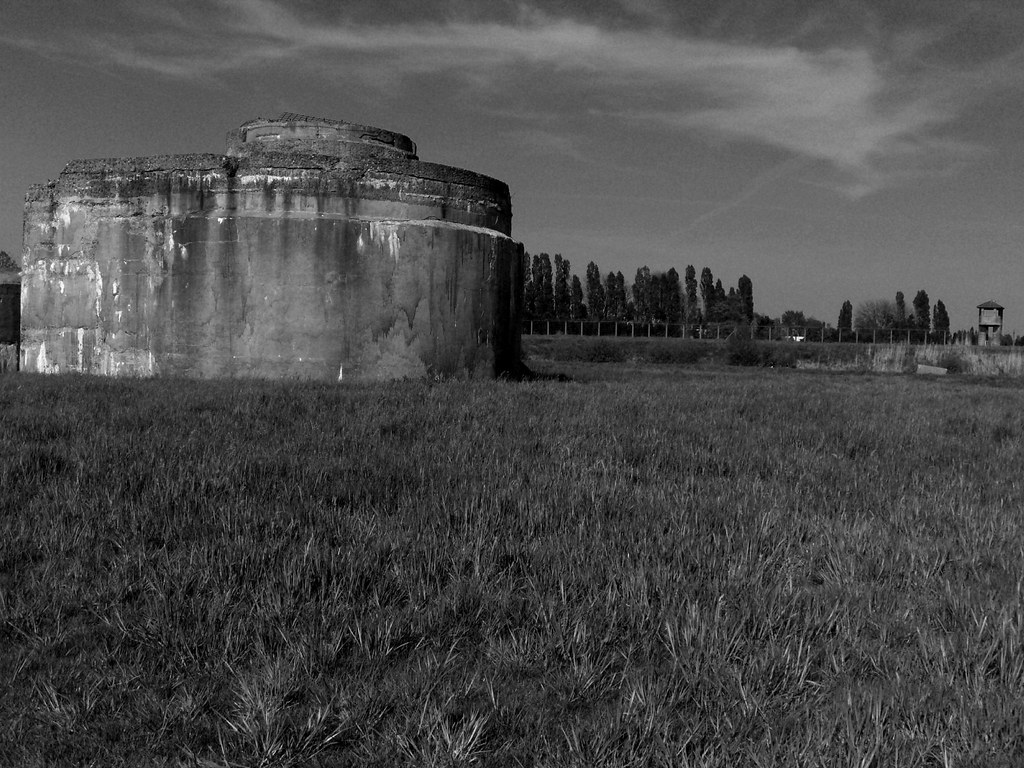
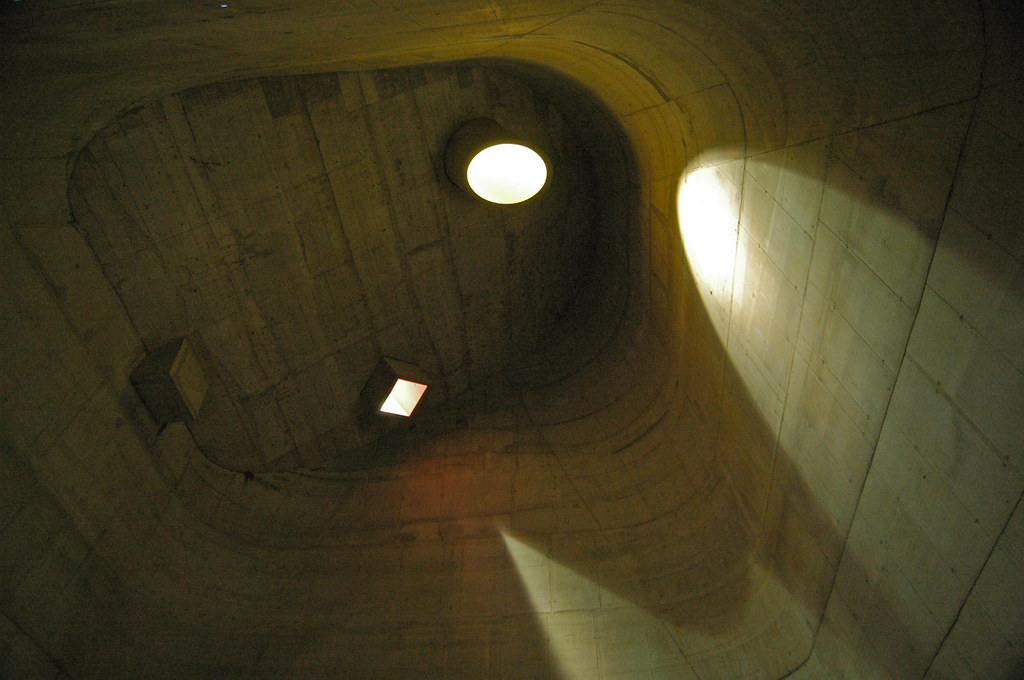
Even now, when I try to remember them, when I look back at the crab-like plan of Breendonk and read the words of the captions--Former Office, Printing Works, Huts, Jacques Ochs Hall, Solitary Confinement Cell, Mortuary, Relics Store, and Museum--the darkness does not lift but becomes yet heavier as I think how little we can hold in mind, how everything is constantly lapsing into oblivion with every extinguished life, how the world is, as it were, draining itself, in that the history of countless places and objects which themselves have no power of memory is never heard, never described or passed on.
-Austerlitz, 24

In the first, the in- or un-human (what is beyond or outside of the "we" that remembers "about" being--though still having a relationship, of course, to the human... cf. the Letter on Humanism of course) is an activity, a reserve of the possibility of meaningfulness--in the sense that it is what provides or provokes memorialized action and keeps that action within itself as always possible qua action. This does not mean that it is a fullness, or that its meaningfulness is the same as any sense "we" may make of it. This is why being remembers "us," rather than the other way around.
But, nevertheless, the stress is not upon the opposite phenomenon which Sebald describes. This is, one could say, the other side of what Heidegger proposes. And yet it is coming from and ultimately returns to a totally different relation to memory and to history. The pressure of that limited nature of what the "we" can remember--this is not some failure to "go beyond," to plunge into the activity or respond to its call. Nor--and this is the more crucial point--is this pressure a function of the decay of the possibility of going beyond the human, into the inuman, into the process of remembrance that is not just about being but that is itself being remembering. In short: the fact that we can only hold so little in our mind, that our memory is not just finite but is not even nearly adequate for the mass of historical meaning that is out there--all this is not just a reflection of how the possibility of being remembered by being is less possible in certain conditions, as Heidegger would say. There is not a devolution or decay of this possibility here, caused by a modernity. It is because Sebald's narrator fundamentally has more respect for what, while not reducible to being human, still falls within the sphere of its everyday activity: that is, the everyday human potentials themselves. This narrator lives in the everyday--and it is here that the significance of his remembering and forgetting lie--not, ultimately (though they may depend on it), in this post-human remembrance that is part of being.
However, there is a commonality about both these statements: the finitude or limitedness of the human mind is due to the fact that there is so much "out there," in the world, and that this world comes at us as something to be remembered. In short, it is because history is also in things, is encrusted or deposited in their walls, foundations, ornaments.