Thursday, January 8, 2009

More on translating "Fetishism"

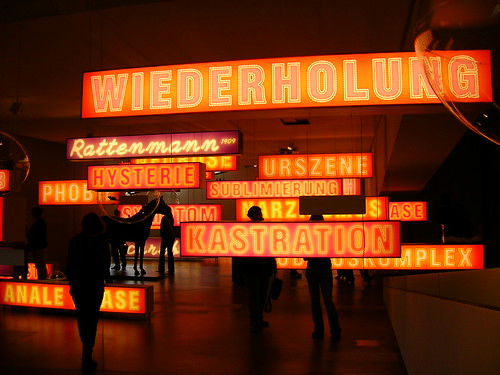
So I finally got a copy of Graham Franklin's new translation of "Fetishism" for the 2002 volume of the New Penguin Freud, The Unconscious. I gotta say, while it improves somewhat grammatically over the previous versions--by Joan Rivere and James Strachey--it duplicates a lot of the errors in those versions and sometimes makes new mistakes I would have never thought possible. All in all, it's a missed opportunity for opening up what in German is a really striking verbal performance. Here I'll just go through and list the problematic points.
The whole rendering of the first paragraph is off, first and foremost. But what really irks me is that Franklin continues in the tradition of Rivere and Strachey in all three versions in botching the last sentence horribly. Freud says:
Der Fetish spielte also in der Regel die Rolle eines Nebenbefundes.

Which I'd translate roughly as:
As a rule, the fetish therefore plays the role of a incidental finding

Pretty simple, no? Well, Rivere says this (in the International Journal of Psycho-analysis, which you can find now in the handy volume edited by Rieff called The Psychology of Love):
As a rule, therefore, the fetish made its appearance in analysis as a subsidiary finding.

Strachey copies this in the Standard Edition version:
As a rule, therfore, the fetish made its appearance in analysis as a subsidiary finding.

And, to top it all off, there is Franklin:
As a rule, then, their fetish came to light only incidentally during analysis.

Why do all the English versions available get rid of the theatrical metaphor? Odd. It could be because I've got my grammar wrong, and somehow the verb (spielte) is working differently than I think it is... but that doesn't seem right. And why the addition of "in analysis" in all these versions? Both these moves seem to me unncessary, though Franklin actually quite nicely got himself out of the problem of trying to convey what a "Nebenbefundes" is--and this perhaps was a good choice.
Then there is the very crucial sentence about the penis' narcissism:
Nein, das kann nicht wahr sein, denn wenn das Weib kastriert ist, ist sein eigener Penisbesitz bedroht, und dagen sträubt sich das Stück Narzißmus, mit dem die Natur vorsorglich gerade dieses Organ ausgestattet hat.

Rivere, which despite his grammar distortions I like, because he is spirited:
No, that cannot be true, for if a woman can be castrated then his own penis is in danger; and against that there rebels part of his narcissism which Nature has providentially attached to this particular organ.

Strachey:
No, that could not be true: for if a woman had been castrated, then his own possession of a penis was in danger; and against that there rose in rebellion the portion of his narcissism which Nature has, as a precaution, attached to that particular organ.

Franklin:
No, this cannot be true, because if women have been castrated, then his own penis is in danger, and the piece of narcissism, with which nature providently equips this very organ, recoils at the thought.

What!! The penis is thinking!
Or, let me put it differently: everything in this sentence revolves around the "sträubt sich." In an effort to again dilute the resonances of this word, or perhaps convey these resonances in a different sense than Rivere and Strachey have--they have given it what is, I think, given the events in Red Vienna in 1927 (like the burning of the Palace of Justice)

a sort of political valence--Franklin has made it into a sort of colloquial phrase: "recoil at the thought." Even if recoiling is a bit better at communicating the sort of revulsion that verb implies, including "thought"--which is nowhere in the German--cancels out any progress that is thereby made. And "providently," on top of all this, is just unforgivable. "Providentially" is the only acceptable form of that word--otherwise Freud just sounds like he's a snooty Brit. I think Strachey is a bit better in rendering "vorsorglich" as "as a precaution," though this might be a bit more heavy and erase the type of agency that Freud is attributing to Ms. Natur. Nature acts with foresight, but also with care here. I'd render it as the following:
No, that can't be true, because if the woman is castrated, then his own penis is threatened, and counter to this there rioted that part of the narcissism with which nature has preventatively equipped exactly this organ.

But "preventatively" doesn't even really cut it. There's got to be a better solution, and Franklin just looks like he either tried too hard or not enough. I think if you play up the military metaphor--politics runs through this piece, as an essay of mine which you'll see here soon will try and show--and maybe say that Nature did not just "equip" the penis but in fact "outfitted it" (which also has the benefit of playing upon the clothing and performative register that we saw earlier at work), we could then perhaps make the "vorsorglich" a bit more mild, loving, caring: "which nature has, with foresight, outfitted exactly this organ"--or something to that effect. I'll also note there is huge confusion on "das Weib," and I think that Franklin's decision to go with just "women" is bold, especially because he doesn't (like any of the other translations) seem to get the tense right of the verb: what I (following my translating authority Sand Avidar-Walzer) think is "if the woman is castrated" becomes "if women have been castrated." I might in the end be convinced to go with the plain "woman" if Franklin changed the verb to "is."
I'll end up on a good note, though: Franklin has the best rendering in English of one of the most complicated sentences I think exists in all of Freud:
Der Hergang wer also der, daß der Knabe sich geweigert hat, die Tatsache seiner Wahrnemung, daß das Weib keinen Penis besitzt, zur Kenntnis zu nehmen.

I have this roughly as the following, which is just dry:
So what happened was that the boy refused to grasp his knowledge of the fact that he apprehends that the woman does not possess a penis.

Rivere tries his best:
What had happened, therefore, was that the boy had refused to take cognizance of the fact perceived by him that a woman has no penis.

Strachey follows this and ends up with something just as ugly:
What happened, therefore, was that the boy refused to take cognizance of the fact of his having perceived that a woman does not possess a penis.

And Franklin with unbelievable elegance solves the problem with a comma (and a colon, which is a bit much), which both duplicates the unsettledness the German creates but also keeps it just as clean:
What has happened, then, is this: the boy has refused to acknowledge the fact that he has perceived, that women have no penis.


Monday, January 5, 2009

Against the New Aestheticism

Perhaps one of the biggest things we're suffering from now in Anglo-American literary criticism is how little we know how to handle a post-hermeneutic mode of interpretation. That is, as we gather more and more of an idea of what post-hermeneutical criticism would actually look like, we are, at the same time, losing a sense of how older critical devices can be turned towards this new form of criticism (or how we can invent new devices out of old ones). In other words, it doesn't take as much effort as some people might think to use a device in a post-hermeneutical way. So what is betrayed is not a lack of knowledge about what interpretation would be like without hermeneutics, but a lack of knowledge about how this new interpretation really is already at work in many ways in what we do already.
We generally know now, I think, that there are several forms this post-hermeneutic interpretation would look. The clearest example--that is, the one that is easiest for us to wrap our head around as far as how its post-hermeneutic operations look--is a sociology of literature: here what is at issue is nothing about the meaning of a text, but how that text fits into a system that produces that meaning as an effect of its (the system's) operation. It does this little switcharoo, however, without trying to say that the system is any more viable a source of meaning than the text: this is what makes it less hermeneutically invested--it doesn't try to find a real sphere where meaning originates. The post-hermeneutic act of interpretation, then, is in the laying out of the system. Franco Moretti gives us some very clear examples of what this work of elaboration can involve: making graphs or maps of data (how many copies sold, where, how, etc.) or just simply the explanation of the paths between these pieces of data.
What Moretti doesn't tell you, though, is that we do this already, sometimes, in hermeneutic interpretation. We just don't emphasize it, or really work on it for its own sake. When I write an essay about a book, I organize whatever I find out about it. A lot of the work of my hermeneutic effort depends on this organization. But I eventually use it for hermeneutic ends. And because I do so--and here is why my hermeneutic effort will look a lot different than Moretti's--I confine myself to the work that exposes sites of meaning. And these tend to be internal to the text (or intrinsic, to use the old term). And even when they are extrinsic (sales figures, etc.), they tend not to extend themselves out into networks that aren't subordinated to the intrinsic work of the book. They therefore don't give us a wide ranging study of the networks themselves--studies like Pascal Casanova's.
But this presence of the post-hermeneutic in the hermeneutic should be kept in mind, I think. For what happens when this isn't recognized is you get post-hermeneutic critics trying to just pick up the hermeneutic devices without caring about how they have to modify them to be post-hermeneutic. In other words, they just use all the old devices and say they are not unlocking meaning with them--and in a lot of cases, we just have to take them on their word that they are doing this. This is how that odd phenomenon that I will call the New Aestheticism--a phenomenon that is catching on--works. New Aestheticist critics (I have Michael D. Hurley in mind, but also bits of Stanley Fish and even Eve Sedgwick) use certain ambiguous but old and commonsense categories like "feeling" or "pleasure" (as in, how does that poem make you feel?) to try and 1) integrate these maligned phenomena back into the work of interpretation (which is laudable) and 2) make these phenomena into a sort of unmeaning excess that is the only point of the text. Not only does the second aim completely undo what would have been the laudable aspects of first (it effectively maligns affect yet again--and I think this is pretty unforgivable, because at the same time these people act as if their crusade in the name of affect makes them a morally justified), the second point really misunderstands what post-hermeneutic interpretation is about. That is, the second point proceeds as if post-hermeneutic interpretation is only the act of pointing out that the only meaning of a text is a non-meaning. In other words, the Aestheticists think that if you come up with a sort of moment where what is at work is something vague (unelaborated) like a pleasure (individual or collective), and then say that all the text does is produce this, you've canceled out any particular hermeneutical work you've done along the way--and that this cancelling out is the goal of post-hermeneutic discourse. But it's evident that this isn't really talking about pleasure (it's talking about meaning) and it isn't really post-hermeneutic, because it doesn't--like the graphs do--use any devices as post-hermeneutic devices. It uses them as hermeneutic devices and then tries to subtract their work.
The real problem would be precisely finding out how these old hermeneutic devices look when they operate in a post-hermeneutic way--and how they have to maintain themselves to keep working, i.e. what demands they make or compromises they have to bring about on the part of the critic. This is what I find in the work of some (and only some) deconstruction: in this area, we have close reading without its hermeneutic goal--close reading that doesn't bring out any meanings but instead organizes a text differently than before. To think about the micro-elements that make up this work of reorganization, and how they must work if they themselves do not produce meaning--this is what deconstruction is, and what makes it a neat site of (still pretty intrinsic, unfortunately) criticism that tries to negotiate these problems, not run away from them.
Or rather, act like it is too in the right to deal with them. For the real bad thing is these New Aestheticists have the gall to attack other post-hermeneutic modes of criticism: they yell at the New Formalism, which has these post-hermeneutic tendencies (especially when it becomes Derridian), and against the sociology of literature people. This is partially because the New Aestheticism becomes merely intrinsic again, shutting itself off from a lot of "statements about society," as it might call the result of these other forms of interpretation--while modestly claiming that it wouldn't presume that it was able to say anything with that weight (when it is in reality presuming twice as much and is half as moral). Most often, though, they yell at "theory." Theory--and what to them is its sidekick, cultural criticism--was nothing other than the subordination of post-hermeneutical efforts (the work of Derrida, Foucault, Lacan, etc.) to hermeneutic ends. Theory is the mistake that the New Aestheticst's approach will reverse by focusing on more traditional, but more overlooked (in the recent years of theory's wildness, particularly due to its fascination with politics) elements of the text.
I'd contest the idea that theory worked this way, however. This seems only to describe bad theory--which is just bad literary criticism in general. Theory might have worked precisely as a way for people to organize their ideas in a post-hermeneutic way. It did this not by actually carrying out what the post-hermeneutic authors that were its progenitors (Derrida, etc.) were saying, but it sort of met them half way by deploying something similar of its own.
For when we talk theory, we are usually describing something we could talk about in a different way. Theory is a sort of shorthand, in most cases, for concepts of interpretation that are often different than those of old (those of the New Criticism). I might say that the particular moment in this text reminds us of Lacan's mirror stage, which I would then outline... and this would be a theoretical remark. I can even use one theorist and then another: the mirror stage can be imbued, here, in this textual instance, with a sort of Foucauldian power... This is the way theorists often talked, and often confused ideas--as the New Aestheticists would say. I'd say instead that while this was a confusion, it was doing something more as well. This sort of shorthand allowed one to proceed more and more without reference to meaning insofar as it originated in the text itself. One could be led, then, from theorist to theorist--submitting the text to the play of this sort of parallel interpretation that was going on. For what happened was the theorists would be elucidated with respect to each other, fit together in new and interesting ways. Or at least one theorists ideas, reified by this process, would be made to work in odd ways that perhaps, if they were submitted to some ideal of systamaticity (or even to the rules of organic, philosophical thought, which theory does not follow), or even to the rest of the system from which they originated, would not have occurred to anyone. In other words, what happened was that the text got related and referred to a discourse that was developing alongside it. And what this did was pry away the interpretive effort from the hermeneutical effort in the first place. This is what theory did, I think, and it is the only way that a more rigorously post-hermeneutical discourse can now (in the Anglophone world) be taken up. Theory, then, was a post-hermeneutical modification of one of the basic tools in the hermeneutical toolkit: the reference to an authority, usually philosophical. This work of reference was made to work in and of itself, and forgo its capability for elucidating the text. The authority would then merely cohabit the interpretive essay with the text, and at this point--though it also was sustained by a huge academic regime, and this I would say was a very bad step--would be working out what interpretation was like without opening up a meaning in the text.
So far from being a mistake, theory was what makes the discourse of the New Aestheticists possible, and may have even operated in a similar way to other forms of post-heremeneutic criticism. What it didn't do, though, was make the post-hermeneutic use of interpretive devices seem easy, which is practically the only thing the New Aestheticism does (although I'd say this only of some theory, in the end: theory also did this, and thus actually made possible the New Aestheticist fascination with canceling out its hermeneutical work--just look at Spivak and her fascination with writing under-erasure and you will see this is the real goal of that erasure). The focus on pleasure, the focus on the excessive feeling that a text gives you, when this is considered as non-meaning, does not give us anything in itself. As I said, it even erases what is left of any conception of pleasure that we have--and it is dependent upon preserving the ambiguousness and thus the maligned and ostracized status of pleasure. (So to the idea of pleasure or feeling that this criticism employs must be opposed, precisely, Raymond Williams' idea of structures of feeling--an idea that has affinities with a sociology of literature.)
Allowing a mere descriptive work of interpretation, a phenomenology without a point (phenomenology's strength is that it invokes the ideal, the invisible), this New Aestheticism should be avoided. Above all, it forgoes the need to explain more what is theoretically advantageous about its conception of pleasure, or even to look into its origins (Hurley, for one, is completely anti-scientific and would resist this project). Without a more elaborated notion of what pleasure is, about what will be cancelled out by the work of the New Aestheticist criticism--and, for that matter, the work of cancellation itself, which is merely effected by the reference to a vague notion of pleasure now--all we have in the end is one of those old vague analyses of style, or, even worse, something like a book club. It is not that literary criticism has to be submitted to the rigors of scientificity--and this is really what the New Aestheticism rejects, not hermeneutics (but passes its opposition for the former off for opposition to the latter). It is just that what this idea of scientificity allows is rational discourse, discourse that is sustained by discussion and by the articulation of points. And this is not in opposition to a post-hermeneutic project. The idea that it is, that we can only have a discussion that operates post-hermeneutically if it is not submitted to the rigors of articulated discourse--this is what is at the heart of this turn back to the excess of (this made-up and unstructured conception of) pleasure, of feeling.

Sunday, January 4, 2009

A bit on photography: digital ghosts

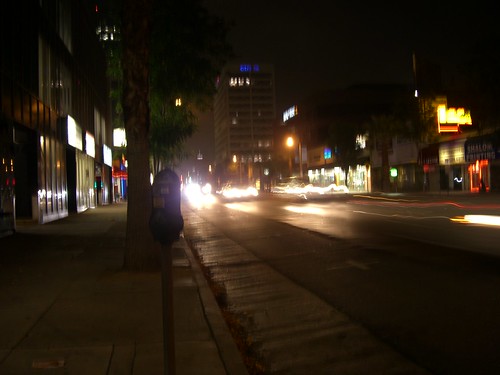
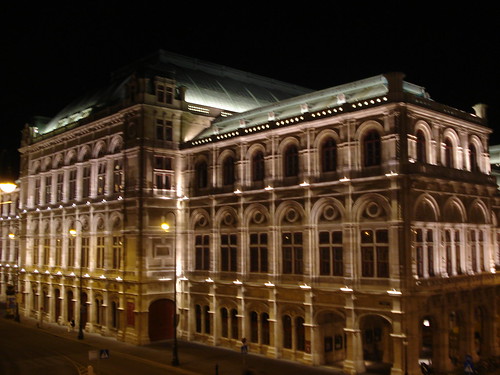
If the old photograph rendered its subject spectral, as Walter Benjamin never tired of emphasizing, and which the spirit photographers of the late 19th century literalized, I feel like the average little digital photos we take now on our simple digital cameras (preferably on a night out) show us (again?) that this spectralization was always filtered through the technical. Put more clearly, while the spirit photos of the late 19th century literalized the spectrality of a technology, the pleasure we take in many digital photos now is one of literalizing the technical nature of this spectrality. This is a pleasure that will probably disappear very soon with the advancing sophistication in digital cameras, but still remains most visible in pictures of the night.

Here I just want to call attention to the fact that we might be almost at the end of this interesting period in photography--as I'm sure many people more specialized in the field than me have probably noted. It is not unlike the end of the era of 8-bit images, which we now nostalgically look back at. These are, incidentally, captured well by Michael Wolf in his monumental The Transparent City: the grid-like structures provided by buildings (which were much more oppressive in his The Architecture of Density)

here are able to be filled in, just like in any little 8-bit graphic. Accordingly the detail shots of the people who inhabit these buildings are extremely pixelated:

The particular inability of the digital image to capture phenomena, however,--and especially at night--which produces a clearer image in some parts and a longer-image exposure in other areas, along with the play of light and even the iridescent vein-like outlines and scale-like squares of compression will perhaps be gone soon too, only to make a comeback. The pictures allow us the sense that the disoriented feeling, that ghostlike feeling, of life is not just due to the fact that death inhabits it--this was spirit-photography's point. What digital photos allowed was the sense that this death in life was technical, was due to the immense amount of mediation that our experience has undergone in the last few years.
At least this is the only way I can explain the amazing fact that over the years as the technology has gotten better these phenomena of the digital photo became more fun to see. As cameras adjusted the image already as you were taking it to stabilize it and prevent problems of underexposure and blurring, one began to take pictures in such a way that one was negotiating with the camera, working with and against it, in an extremely organic way. The pleasure you took in the odd blurred photo then (which was only blurred in certain areas to a certain degree), was in the fact that something could escape and emerge out of this dance. But the fact was that at the same time what emerged would have to be even more technical, or produced by the errors and creativity in the technology. That is, taking pictures became more than ever relating to the abstractness of the machine which actually performed it. The surprising over-exposure, or underexposure, or blur, would be brought to you the more arbitrarily and randomly the you manipulated the device. In short, what is special to to this particular digital image, I think, is that the texture of the photo is brought out, often, but not on the surface, like it is in wonderful gritty (and undersaturated) photos of New York, for example, in the 70's.

In the digital photos the texture is, because it originates in the back and forth in the algorithms and not in the actual mechanisms of the camera, more tightly imbricated with the particular objects photographed. The texture, the surprise, is more in the things than in the medium. And what's more, its totally without pretension, without setup. (The use of the flash gets rid of this effect sometimes while keeping, or perhaps even emphasizing, the hand-held nature--American Apparel figured this out, taking it, of course, from amateur porn. The processing of the camera that is involved without the flash seems to take longer and be more involved, thus becoming more and more technical. Flash brings back the surface, in other words.)
Perhaps this is due to the fact that what was being integrated into these photos was not the eye, but the hand--digital photography became, as it became more handheld (like it did with the 35mm cameras of old), a more bodily experience. This would correspond with the notion that the technical mediation of experience was everywhere, or is at least more tactile, and therefore not just in the eye. Regardless, photos such as the one above--someone else's experiences in Paris that I just stumbled upon randomly--and some like the following


will remain my favorites long after the stabilization techniques overtake our ability to work against them (and with them) manually, thus making all the images of night fixed and clear.